
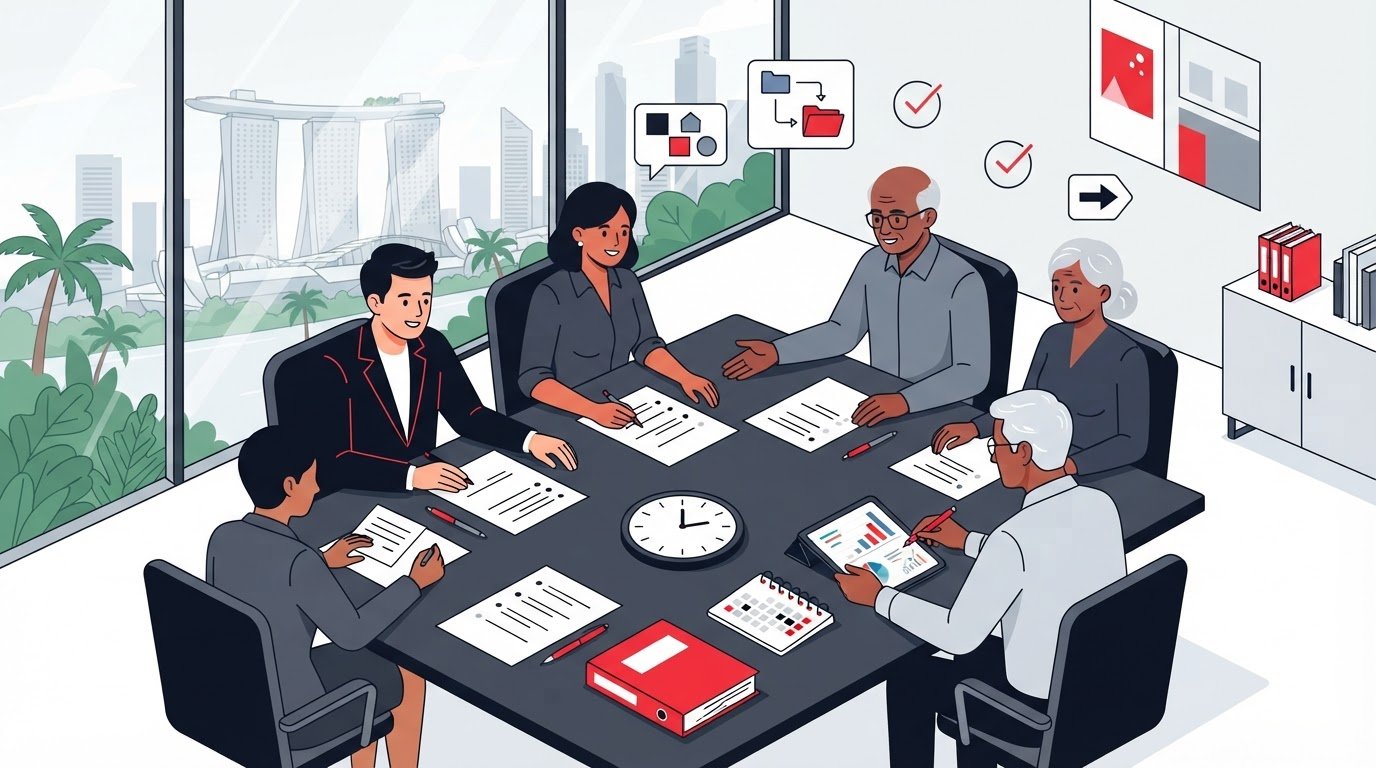
Your first board meeting is an opportunity to understand the discussion, not to have every answer ready. Meetings often last between one and three hours, depending on the agenda and decisions to be made. Knowing how to prepare for your first board meeting means reviewing the materials, arriving with focused questions and leaving with a clear follow-up plan.
If you’re new to a formal board setting, you may wonder what belongs in the board pack, how much to contribute and what happens after the meeting. Startups may still be building these routines, but the goal is the same: make space for useful oversight and decisions, not just updates. This guide covers meeting length, company and board materials to review, how to contribute confidently, and how to record decisions and follow through. You’ll also learn what a formal startup board meeting commonly covers, so you can arrive prepared and focus on the discussion.
Key Takeaways
- Listen for context before weighing in, and shape questions around relevant data and practical next steps.
- After the meeting, turn assigned actions into clear follow-ups and keep the approved minutes distinct from personal notes.
- Use the board pack to connect financial performance, risks and strategy, then note where the documents raise questions.
- In a startup board meeting, expect formal agenda items alongside strategic discussion, and prepare to contribute to decisions that need the board’s input.
1. How long is a board meeting?
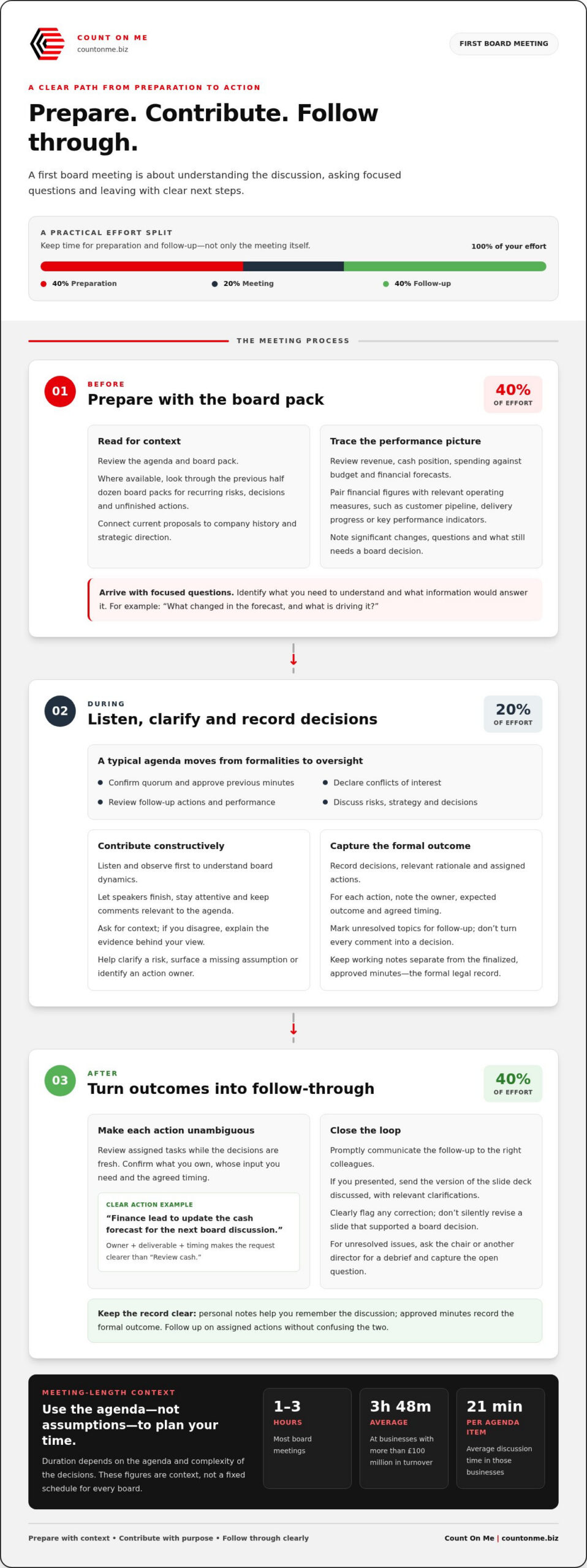
Most board meetings last between one and three hours, depending on the agenda and the complexity of decisions. At businesses with more than £100 million in turnover, meetings average three hours and 48 minutes. For a Singapore startup, use the agenda and decisions required to plan your time, rather than assuming every board meeting follows the same schedule. A first meeting can feel daunting, but preparation helps you follow the discussion without rushing to speak.
A typical agenda covers confirming quorum, approving previous minutes, declaring conflicts of interest, and reviewing strategic or financial matters. Meetings often begin with minutes and follow-up actions, then move to performance, risks and decisions. For businesses with more than £100 million in turnover, discussion averages 21 minutes per agenda item. Treat that as context, not a fixed allocation for every Singapore board meeting; complex decisions may need more discussion than routine updates.
For financial reporting, focus on the figures directors need to assess performance and make decisions: revenue, cash position, spending against budget and financial forecasts. Pair these with relevant operating measures, such as customer pipeline performance, delivery progress or the company’s key performance indicators. Choose metrics that reflect the organisation’s priorities, and explain significant changes alongside the team’s next steps.
Listen actively before contributing. The Corporate Governance Institute recommends that new board members listen and observe to understand board dynamics before trying to influence discussions. Follow the board pack and note how directors raise concerns, test assumptions and reach decisions. When something is unclear, ask a focused question that invites context, such as, “What changed in the forecast, and what is driving it?” This lets you use your skills constructively without treating every discussion as a debate.
Good boardroom etiquette starts with paying attention: let the speaker finish, keep devices from disrupting the discussion and relate comments to the agenda. If you disagree, explain the evidence behind your view and invite others to respond. Don’t challenge an idea simply to demonstrate engagement. A useful contribution might clarify a risk, surface a missing assumption or identify an action that needs an owner.
Listen before offering advice, especially when you’re new to the organisation. Ask what the team has already tried and what constraints shaped the decision. If a discussion is unresolved, note the open question and suggest returning to it with the relevant information. A practical preparation approach allocates 40% of effort to preparation, 20% to the meeting itself and 40% to follow-up. That balance keeps the meeting focused on decisions, not surprises.
2. Recording decisions and following up after the meeting
A productive board discussion needs a reliable record. Board meeting minutes are the finalized, approved record of the meeting and a legal document, prepared under the rules governing the board’s operations. Keep your working notes separate from the approved minutes. Notes help you remember the discussion; minutes record the formal outcome.
During the meeting, record each decision, its rationale where relevant, and any action assigned by the board. For each action, note the owner, expected outcome and agreed timing. For example, “Finance lead to update the cash forecast for the next board discussion” is clearer than “Review cash.” Don’t turn every comment into a decision. Mark unresolved topics for follow-up instead.
Questions based on the agenda can make your notes more useful. Before the meeting, write down what you need to understand and what information would answer it. If a director raises a concern about a forecast, note the question, the response and whether further analysis was requested. This helps distinguish a discussion point from an agreed action.
After the meeting, review your assigned tasks while the decisions are still fresh. Confirm what you own, identify whose input you need and promptly communicate the follow-up. If an action depends on another team, explain the board’s decision and the specific information required. A brief message stating the owner, deliverable and agreed timing helps prevent different teams from interpreting the request differently.
If you presented, thank the board and email the slide deck after the presentation. Send the version discussed, with any relevant clarifications, so directors and the audience can refer to the same material. Keep the email focused: identify the topics covered, highlight any agreed action and explain what information will follow. Don’t silently revise a slide that supported a board decision; clearly flag any correction.
If an issue remains unresolved, ask the chair or another director for a debrief after your first meeting. A focused conversation can clarify board expectations, how a decision was recorded and who will coordinate the next step. If the discussion needs more work, capture the open question and send it to the relevant people instead of letting it disappear from the agenda.
Clear records connect board decisions with corporate follow-through. If governance administration needs more structure, corporate secretary services can be a relevant part of supporting that work. Keep the immediate next step simple: check your assigned actions, contact the right colleagues and preserve the final approved record.
3. Researching company history, strategy and board materials
Start with the board pack, then connect its figures and proposals to the organisation’s history and strategic direction. Review the previous half dozen board packs where available to identify recurring risks, decisions and unfinished actions. For example, a pattern of delayed product launches may affect how you assess a new growth forecast. Note what has changed since earlier discussions and what still needs a board decision.
Read the agenda alongside its supporting documents, rather than treating it as a standalone list. Board materials commonly include previous minutes, financial statements, strategic updates, risk reports and governance or compliance documents. Compare performance updates with the company’s stated priorities. If a strategic plan prioritises customer growth, look for the metrics and risks that show whether progress is on track.
Before the meeting, review the company’s Articles of Association, strategic plan, annual financial report, previous minutes and risk register. These documents help you understand the organisation’s structure, priorities and recorded decisions. Use the risk register to identify who owns each major risk and whether the board has discussed or acted on it. Note gaps or inconsistencies as questions rather than assuming their cause.
Research fellow directors’ backgrounds and expertise through the organisation’s website and professional profiles. Look for experience relevant to the agenda, such as finance, technology, operations or a key market. Understanding members’ roles helps you see how expertise informs discussion. Note who is an executive director and who brings a different perspective, then listen for how responsibilities and views shape the conversation.
For a Singapore board role, understand the governance responsibilities attached to your appointment: directors should act in the company’s best interests and exercise independent judgment. Treat non-public board materials and discussions as confidential, and follow the organisation’s rules for handling and sharing them. If a previous role or relationship could affect your independence on an agenda topic, raise it through the appropriate board process.
Turn your research into a short preparation note. Group questions by agenda topic, identify the evidence behind each one and mark where you need more context. For example, if a risk report describes rising exposure but gives no clear mitigation update, ask who owns the response and what progress the board should review. This keeps the discussion focused on the strategic issue rather than retracing the company’s history.
Research supports good judgment, but it doesn’t mean arriving with a fixed verdict. Read the materials closely, listen to directors’ explanations and test your assumptions against the organisation’s context. Aim to understand how previous decisions, current performance and future priorities fit together before offering advice.
4. Formal board meetings for startups
For a startup, a formal board meeting turns investor and director input into focused oversight and decisions. Board meetings usually take place once every quarter, so each agenda should make room for issues that need the board’s judgment, not just routine updates. A useful discussion links current performance to the company’s purpose, strategic priorities and next steps.
In Singapore, use the company’s constitution and meeting procedures to guide notice, quorum, voting, minutes and resolutions. Record decisions and resolutions in the minutes, following the company’s approval process. Before your first meeting, understand how directors are notified, how attendance is recorded and what happens if a conflict affects an agenda item.
A typical startup agenda begins by confirming quorum, approving previous minutes and declaring conflicts of interest. It then moves to strategic or financial matters and decisions requiring board input. The chair may ask participants to declare conflicts related to specific topics. Read the agenda in advance and note which items require approval, discussion or an update.
Keep updates concise so directors have time to discuss options. A CEO update can cover strategic learnings, key performance indicator status, priorities, what is and isn’t working, and the company’s overall position. Present a customer pipeline overview rather than reviewing every customer individually. Send the board deck a few days before the meeting and identify three to four core topics where you need input.
One useful structure devotes one-third of the meeting to reviewing performance, then uses the remaining discussion for two or three major strategic decisions. This keeps the board focused on trade-offs, risks and actions. Put detailed operational questions into ongoing communication or a separate discussion with the relevant director, rather than letting them crowd out strategic choices.
If you’re presenting, confirm the allotted time and the level of detail directors prefer. A presentation may allow ten minutes before questions, so lead with the decision or takeaway, then show the evidence and options. Answer questions openly. If a discussion becomes lengthy or narrowly relevant, suggest taking it offline, but let a crucial, productive conversation continue.
Startup formality should support clear accountability, not add ceremony for its own sake. Open by reconnecting the discussion to the company’s purpose and long-term vision. Close each agenda item by confirming the decision, owner and next step. This makes board input actionable between meetings and gives the executive team a clear record of what to do, with guidance from Count On Me.
Count On Me: Cloud Accounting & Bookkeeping
Count On Me helps Singapore businesses organise the financial and administrative information behind board discussions. Cloud Accounting & Bookkeeping supports clear financial reporting, while Tax Compliance & Advice helps businesses manage their tax obligations. Payroll Management Solutions help keep payroll processes in order, and Corporate Secretary Services support corporate governance administration.
These services can support startups establishing a regular board process and maintaining dependable records for financial updates, compliance and follow-up. Clear, well-maintained information helps you prepare relevant materials and keep board discussions focused on decisions rather than gaps in the underlying records.
To discuss support for your business, contact Count On Me or visit countonme.biz.
Build a board routine you can rely on
Your first meeting can be the start of a repeatable board-readiness routine. After each meeting, note which materials helped directors make decisions, where questions remained and what the team should prepare next time. Over time, this reflection can help you tailor the agenda and board pack to the company’s changing priorities. Knowing how to prepare for your first board meeting is less about having every answer and more about building a clear process for thoughtful discussion and follow-through.
Reliable financial and administrative information supports this process. Count On Me offers Cloud Accounting & Bookkeeping, Payroll Management Solutions and Tax Compliance & Advice to help businesses manage these responsibilities. Consider whether support in these areas could help your team keep its records organised and board discussions focused on the decisions ahead.
Take your next step with a clear plan, and let each meeting strengthen the one that follows.
Frequently Asked Questions
How long is a board meeting?
Most board meetings last one to three hours, with the agenda and complexity of decisions shaping the length. Allow time around the scheduled session to review materials, join early and capture immediate actions afterward. Discussions may run longer when directors need to test assumptions or weigh significant choices, so avoid scheduling another commitment immediately after the meeting.
What should you do before your first board meeting?
To decide how to prepare for your first board meeting, ask the chair what to expect, including induction, training, available support and meeting etiquette. Clarify whether the organisation has a dress code and whether the setting is formal or relaxed. Review the agenda and prepare focused questions. If you’re attending remotely, update your computer and test your meeting setup so technical issues don’t distract you.
What documents should you prepare for a board meeting?
Prepare a working copy of the agenda with notes beside items that need your input. Keep supporting documents easy to find, and mark the page or section that supports each question. If you’re presenting, have the source data behind your charts ready so you can explain an unexpected movement. Keep personal annotations separate from official records, and use the board’s approved process for handling confidential materials.
How should you prepare and present a board meeting deck?
A useful way to approach how to prepare for your first board meeting is to build your deck around the decision or insight directors need to understand. Use readable, clearly labelled charts, explain what changed and why, and end each topic with its business implication. Rehearse aloud rather than reading from slides. If you don’t have an answer, say what you know, identify the gap and explain how you’ll get the missing information.
What questions should you expect from board members?
Expect directors to probe the assumptions behind your outlook, the risks to key priorities and the evidence supporting your conclusions. They may ask what changed, what the team has learned, which options were considered and what help or decision is needed. Prepare concise responses that connect each question to business impact. For example, explain how a slower customer pipeline affects hiring plans, not just the sales update.
How should you handle disagreements or difficult questions in a board meeting?
Stay composed, clarify the concern, then respond with relevant evidence and a clear explanation. If a director challenges your forecast, distinguish confirmed results from assumptions and describe the available choices. Don’t become defensive or guess when you lack an answer. Acknowledge what needs further analysis and agree how you’ll report back. If discussion stalls, ask the chair to summarise the unresolved point and decide the next step.