
Financial literacy isn’t about becoming an accountant. It means understanding your business’s numbers well enough to make informed decisions. To learn how to improve financial literacy as a business owner, start with a budget, review your financial statements and use what they reveal to plan cash flow, costs and growth.
Strong financial habits matter, but it can be hard to connect figures with everyday business choices. This article explains financial literacy for small business owners and how budgeting supports clearer planning. It also covers what the balance sheet, income statement and cash flow statement reveal. With a regular review routine, your numbers can become a practical guide instead of a source of uncertainty.
Key Takeaways
- Build financial literacy by learning to interpret your business figures and connect them to everyday decisions.
- Use a budget and regular reviews to spot gaps between planned and actual spending, then adjust your financial plan.
- Read the balance sheet, income statement and cash flow statement as different views of your business’s financial position.
- Monitor cash coming in and going out so you can anticipate obligations and act before pressure builds.
- Consistent, accurate financial records can support clearer planning and strengthen your business’s financial credibility.
1. What is financial literacy for small business owners?
Financial literacy means interpreting and using business information to make informed decisions. For a Singapore business owner, that includes tracking cash flow, understanding profit, planning for tax liabilities and recognising financial risks. Start with the essentials: know what money is due, what must be paid and how each decision affects available cash.
Cash flow needs active management: a profitable sale does not guarantee cash will be available when bills fall due. Invoice promptly, track overdue payments and forecast expected receipts against payroll, rent, supplier bills and tax payments. If customers pay late, use a consistent accounts receivable process to identify delays and follow up. Forecasting can also reveal seasonal demand, giving you time to plan inventory and spending.
Inventory ties up working capital until goods sell. Track stock movement and compare purchasing plans with expected demand, so excess stock does not restrict cash needed for operating costs. Supplier payment terms also affect available cash during lean periods. Review them alongside customer payment patterns rather than looking at sales or profit alone.
Financial risk management starts with identifying what could disrupt operations. Consider variable loan payments, interest rate increases, insurance requirements and the effects of property damage, liability or interruptions. Review the risks relevant to your business and how insurance may help address them. Forecasting tax bills and keeping detailed records of expenses, including wages, supplies and travel, also support planning and tax compliance.
What are the GST registration thresholds and filing rules for Singapore businesses? GST registration depends on whether a business meets the applicable taxable-turnover criteria. Track taxable turnover and filing obligations during regular financial reviews, and seek tax advice when your circumstances call for it.
What taxes and accounting records must Singapore businesses manage? Businesses need to plan for tax liabilities and keep accurate income and expense records. Retain supporting details for supplies, employee wages and business travel, and include expected tax payments in cash-flow forecasts.
What financial skills should small business owners learn first? Start with budgeting, cash-flow tracking and reading basic financial statements. These skills connect daily transactions to decisions about costs, collections and growth.
Where can Singapore business owners find affordable financial literacy courses or workshops? Look for practical finance workshops through business networks, trade associations and training providers. Compare topics and formats, prioritising sessions on budgeting, forecasting and interpreting financial statements.
What financial management training does Enterprise Singapore offer SMEs? Explore Enterprise Singapore’s SME capability-building and support channels for relevant learning opportunities. Useful training should strengthen budgeting, cash-flow forecasting and financial planning skills.
How can business owners separate personal and business finances? Use a dedicated business bank account and record business transactions separately from personal spending. This makes bookkeeping, cash-flow tracking and financial reviews easier to interpret.
2. Budgeting and reviewing financial plans
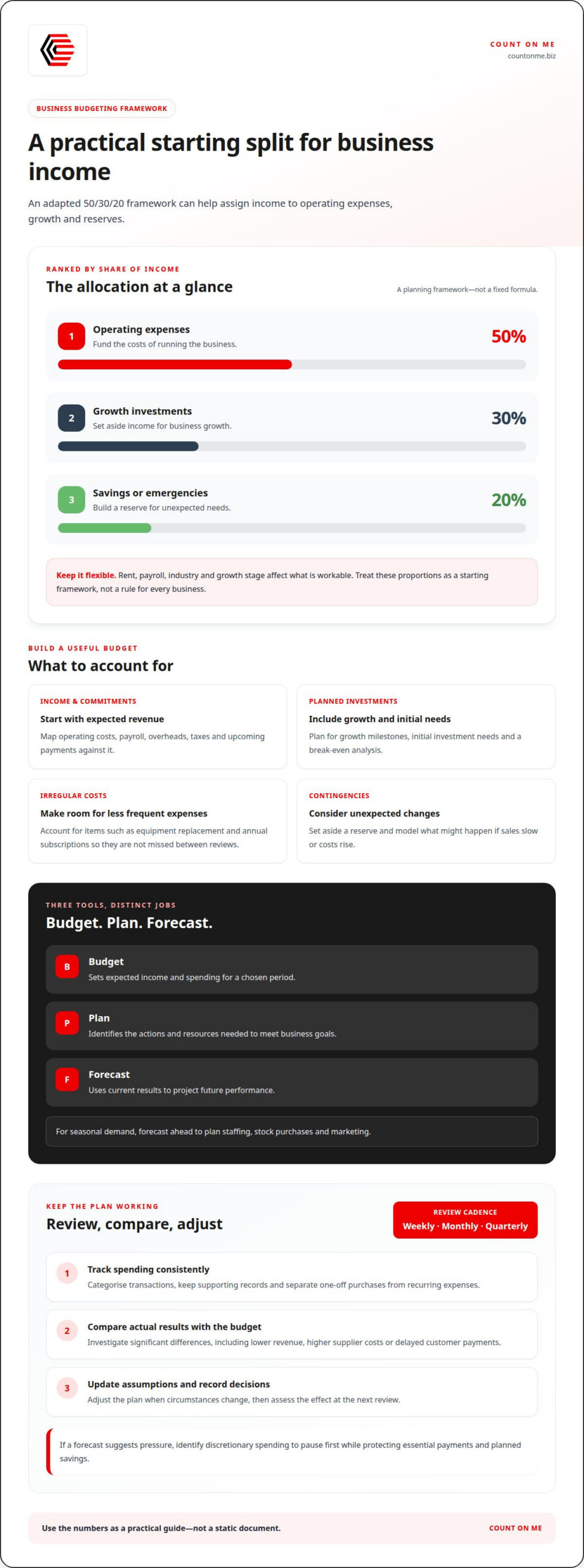
A useful business budget turns priorities into planned income and expenses. Start with expected revenue, then map operating costs, payroll, overheads, taxes, planned investments and upcoming payments. Include irregular costs, such as equipment replacement or annual subscriptions, so they are not overlooked between reviews. A budget assigns each dollar a purpose and helps you see where spending may need to change.
Keep budgeting, planning and forecasting distinct. A budget sets expected income and spending for a chosen period. A plan identifies the actions and resources needed to meet business goals. A forecast uses current results to project future performance. For example, if sales typically rise during a seasonal period, use the forecast to plan staffing, stock purchases and marketing ahead of that demand. Understanding how these tools work together is a practical first step in how to improve financial literacy as a business owner.
Personal budgeting rules can offer a starting point, but they shouldn’t dictate a company’s spending. The 50/30/20 rule divides income into needs, wants and savings. An adapted business version allocates 50% of income to operating expenses, 30% to growth investments and 20% to savings or emergencies. Treat these proportions as a planning framework, not a fixed formula: rent, payroll, industry and growth stage affect what is workable.
Expense tracking keeps a budget useful after it is prepared. Categorise transactions consistently, retain supporting records and compare actual spending with planned amounts. If software subscriptions exceed the budget, review renewal dates and usage before approving new tools. Separating one-off purchases from recurring expenses also helps show whether a variance is temporary or likely to continue.
Review the plan regularly instead of waiting until year-end. Compare actual results with the budget weekly, monthly or quarterly, then investigate significant differences. Check whether lower revenue, higher supplier costs or delayed customer payments caused the variance. Update assumptions when circumstances change and record the decision made, so the next review can assess its effect. This makes the financial plan a working tool, not a static document.
A forecast should connect expected income with future commitments. Include projected revenue, operating costs, growth milestones, initial investment needs and a break-even analysis. Set aside a reserve for unexpected expenses and model what might happen if sales slow or costs rise. The scenario can show which discretionary spending to pause first while protecting essential payments and planned savings. To improve financial literacy as a business owner, revisit these assumptions and learn from each variance.
A lender or investor may ask a growing business for budgets and financial forecasts. Clear assumptions help explain how an investment is expected to support revenue or operations. If maintaining consistent transaction records is difficult, cloud accounting and bookkeeping support can help organise the figures for budget reviews.
3. Reading balance sheets, income statements, and cash flow statements
The three main financial statements answer different questions. The income statement reports revenue, expenses and profit over a period. The balance sheet shows assets, liabilities and owner’s equity at a point in time. The cash flow statement tracks cash entering and leaving the business. Read them together for a fuller view than any one statement can provide.
Start with the income statement. Compare revenue with expenses to see whether operations generated a profit during the period. Then examine the categories behind the totals: rising sales can still hide shrinking margins if supplier or payroll costs grow faster. Profit is not the same as available cash. A sale on credit may count as revenue before the customer pays, while rent and wages still require cash.
Next, use the balance sheet to understand what the business owns and owes. Review cash, inventory and amounts customers owe alongside supplier balances, loans and other liabilities. The difference between assets and liabilities is reflected in owner’s equity. If inventory or unpaid invoices increase, consider whether those assets can support upcoming payments or are tying up working capital.
The cash flow statement helps explain changes in cash, including why a profitable period may still leave limited funds for obligations. Use patterns in inflows and outflows to build a forecast. Compare expected customer receipts with payroll, supplier payments and tax bills, for example. Then model a slower-sales scenario and identify costs you could adjust before a shortfall affects operations or growth.
Accurate records make financial statements more useful. Regularly reconcile bank statements with accounting records, investigate unmatched transactions and correct errors before relying on totals. Record cash receipts and payments promptly, retain supporting documents and restrict access to cash and payment approvals. Where practical, separate the people who record transactions from those who authorise them. These controls make unusual entries easier to spot and help reduce opportunities for theft.
What are common financial mistakes small business owners should avoid? Watch for inconsistent invoicing, unclear margins, missed tax obligations and persistent negative cash flow. Regularly reviewing financial statements can reveal these warning signs while they are still easier to address.
How can a business owner assess profitability, break-even point, and key financial ratios? Use the income statement to compare revenue, expenses and profit, then calculate the sales level at which revenue covers costs. Track relevant ratios over time, such as profit margin and short-term liquidity, and interpret changes alongside the balance sheet and cash flow statement. These skills can also help explain financial performance when seeking funding.
4. Definition and benefits of business financial literacy
Business financial literacy is the ability to understand financial information and use it to guide decisions. It goes beyond recording accounts: owners should understand how spending, pricing, credit and cash availability affect operations. Before adding a role, for example, consider whether projected revenue can support the ongoing salary, not just the recruitment cost.
This understanding makes financial decisions more deliberate. If a product sells well but earns little after materials, delivery and labour, reviewing those costs can show whether to adjust pricing or operations. If a customer requests longer payment terms, consider how the delay affects cash for supplier payments. Figures become useful when they inform a specific choice.
Financial literacy also supports clearer growth strategies. Before investing in marketing, hiring or product development, define the expected outcome and how you will assess it. Track whether the spending contributes to revenue, improves efficiency or serves another business goal. If one income source dominates, consider whether other revenue streams could reduce reliance on it. This connects investment to business priorities.
Reliable financial information can also strengthen credibility when seeking funding. Lenders and investors may review budgets, forecasts and financial reports, so accurate records help explain how the business earns income, manages obligations and plans for growth. Understanding the assumptions behind a forecast also helps you present the purpose of funding and how it supports your business strategy.
Build your skills through a repeatable learning routine. Choose a financial concept, connect it to a real business decision and review the result. For instance, learn how gross margin relates to pricing, apply that understanding to a product line and compare the figures in a later review. Ask an accountant or bookkeeper to explain unfamiliar accounts in plain language. Each cycle can build confidence without requiring you to master every technical detail at once.
Financial literacy helps you move from reacting to figures to using them with purpose. Ask whether you can explain what changed, why it matters and what action follows. That might mean revising a spending plan, delaying an investment or preparing a funding forecast. This knowledge supports better decisions, but it does not replace specialist advice on complex accounting or tax matters, where dedicated wealth management and tax advisory firms such as timothyrobertsllc.com can help align business results with broader financial goals.
Explore support for clearer business finances
Count On Me
Count On Me helps turn financial records into information you can use to make clearer business decisions. Cloud accounting and bookkeeping support helps organise financial data, while on-demand CFO services can support planning as your business evolves. Payroll Management and Accounting & Tax services can also help bring recurring financial responsibilities into a more manageable process.
Consider professional support when bookkeeping takes time away from reviewing performance, reports are difficult to interpret or you need a clearer view of upcoming obligations. Better-organised records let you focus on what the figures mean for your business and the decisions ahead.
Contact Count On Me to discuss your business finances
Make your next financial decision with greater clarity
Financial confidence grows through practice, not by mastering every accounting term at once. Choose an upcoming decision, such as setting a hiring budget or assessing an investment, and write down the financial information that would help you decide. Review the outcome later. This simple habit makes learning a repeatable part of running your business.
If you’re considering how to improve financial literacy as a business owner, ask clearer questions about your numbers: what changed, what caused it and what choice follows? Build on that understanding as your business evolves, and bring in professional support when interpreting accounts or planning becomes difficult.
Each thoughtful review can make the next decision feel more manageable. Keep learning at your pace, and let your financial understanding grow alongside your business.
Frequently Asked Questions
What is financial literacy for small business owners?
Financial literacy means connecting financial information with the choices you make as an owner. Before accepting a large order with a long payment delay, for example, consider its effect on supplier commitments and available cash. You don’t need to prepare every account yourself, but understanding how costs, income and payment timing affect the business helps you discuss options clearly with your finance team or adviser.
What is the 50/30/20 rule?
The 50/30/20 rule is a personal budgeting guideline that allocates after-tax income to needs, wants and savings: 50%, 30% and 20%, respectively. It isn’t designed as a universal business budget. A company has different obligations, such as payroll, supplier payments and taxes, so use the rule as a way to think about allocating resources, not as a required split for business income.
How can a business owner read and understand financial statements?
Choose a reporting period and ask a focused question of each statement. Use the income statement to investigate a change in expenses, for instance, then see whether the balance sheet shows rising amounts owed by customers. Compare those findings with cash movements and transaction records. Writing down the question, relevant figures and resulting action makes statement reviews more practical and easier to discuss.
How can small business owners improve cash flow forecasting and budgeting?
Build a forecast from expected customer receipts and scheduled obligations, then update it as invoices, payments and costs change. Test a simple scenario, such as a major customer paying later than planned or a supplier cost increasing. Compare projections with actual results at each review, note the reasons for differences, and adjust spending plans or timing before making new commitments.