
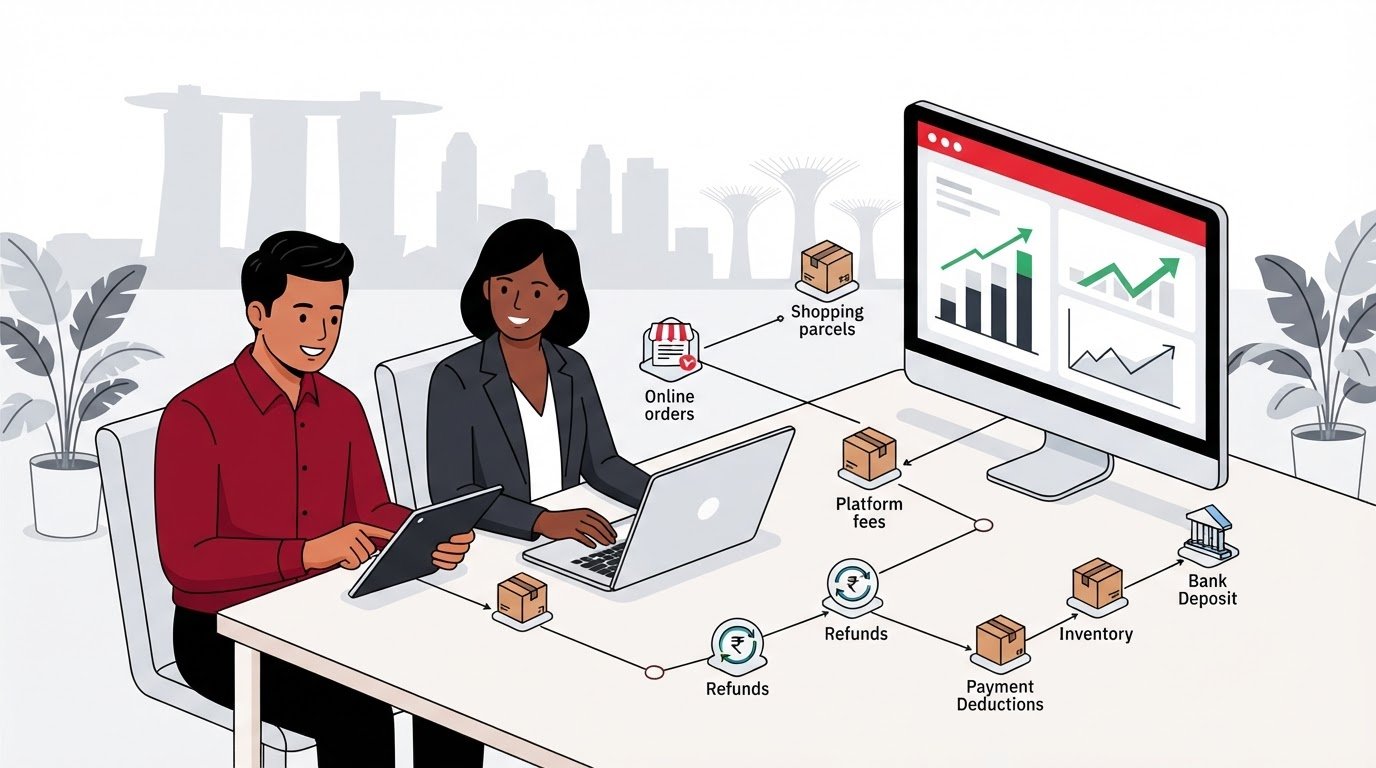
Why can a strong sales day still leave your bank balance looking unexpectedly low? If you sell through marketplaces, the payout may be lower than gross sales because platform fees, refunds, chargebacks and settlement timing affect what reaches your bank. Bookkeeping for ecommerce Singapore businesses works best when each payout can be traced to the sales and adjustments behind it.
A bank balance that “looks about right” is not enough to show how your business is performing. Clear, consistent records help you compare sales across channels, make informed decisions and prepare for Singapore tax compliance. This guide explains how to organise sales, fees, refunds and settlements, reconcile platform activity to bank deposits, and maintain a reliable monthly workflow. It also covers when cloud-based bookkeeping and process digitisation can ease the workload as your business grows. Count On Me provides personalised accounting and bookkeeping support, backed by over 20 years of experience in finance digitisation and automation.
Key Takeaways
- Keep sales reports, settlement statements, expense records and supporting documents together so each transaction has a clear trail.
- Reconcile channel activity through deductions to settlement deposits, then investigate and document any differences.
- Include refunds, payment-provider charges, advertising, shipping and inventory records in your monthly review where relevant.
- A repeatable process across sales channels makes bookkeeping for ecommerce Singapore businesses easier to manage as activity grows.
- If reconciliations fall behind or month-end figures remain unclear, structured bookkeeping support can help establish documented workflows and regular reporting.
Why ecommerce bookkeeping in Singapore needs a clear transaction trail
Ecommerce bookkeeping records and reconciles sales, platform settlements, expenses and their supporting documents. The goal is to trace activity from a customer order through any deductions to the amount received in the business bank account. This transaction trail is especially useful when sales come through several channels.
Ecommerce payout reconciliation means matching a platform settlement to the sales, refunds, fees and adjustments that make up the payout. This reflects basic accounting principles: each figure should have a clear source and context, rather than being treated as an unexplained bank deposit.
Why marketplace sales and bank deposits rarely match
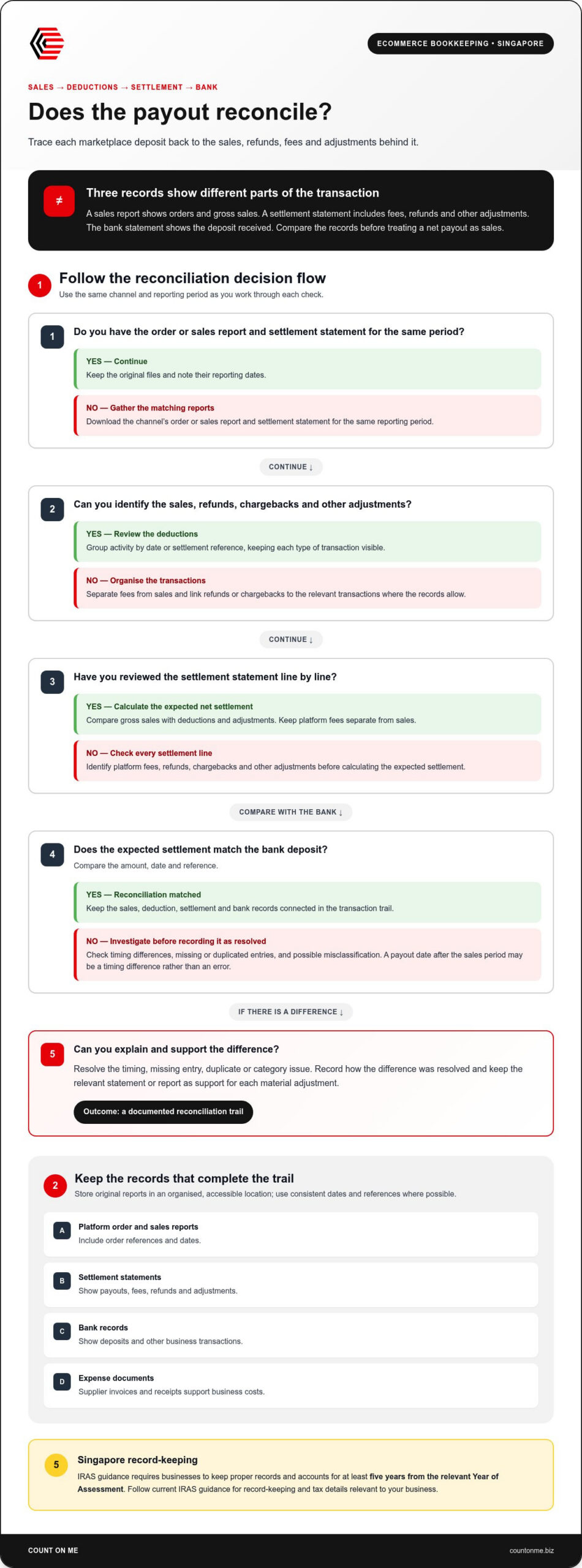
A sales report shows orders and gross sales activity. A settlement statement may combine sales with marketplace fees, refunds, chargebacks or other adjustments. The bank statement shows the deposit received. Since each record captures a different part of the transaction, their totals may not match at first glance.
For example, an order appears in the platform’s sales report, a fee or refund appears in its settlement statement, and the resulting payout appears as a bank deposit. Recording only the net deposit hides the underlying sales and deductions. Transaction-level records make it easier to understand what changed and investigate differences.
Which ecommerce records should a business keep?
Keep the source files needed to follow activity across the platform, settlement and bank account. Useful records include:
- Platform order and sales reports, including order references and dates.
- Settlement statements showing payouts, fees, refunds and adjustments.
- Bank records showing deposits and other business transactions.
- Expense documents, such as supplier invoices and receipts, to support business costs.
Use consistent dates and references wherever possible, and store original reports in an organised, accessible location. This links each entry to its source and makes questions easier to resolve. IRAS guidance requires businesses to keep proper records and accounts for at least five years from the relevant Year of Assessment. Follow current IRAS guidance for record-keeping and tax details relevant to your business.
How to reconcile ecommerce sales, fees, refunds, and payouts
A reliable reconciliation traces activity from customer order to platform settlement to bank deposit. Shopify, Shopee or Lazada are examples of sales channels, but the same approach applies wherever you sell. A net payout alone does not show total sales activity because deductions and adjustments can obscure the gross sales, refunds and charges behind a deposit.
Use this workflow for each channel and reporting period:
- Gather reports. Download the platform’s order or sales report and settlement statement for the same period. Keep the original files and note their reporting dates.
- Group transactions. Organise sales by date or settlement reference, and keep refunds, chargebacks, fees and other adjustments identifiable. This makes each type of activity visible.
- Identify deductions. Review the settlement statement line by line. Record platform fees separately from sales, and link refunds and chargebacks to the relevant transactions where the records allow.
- Match the settlement. Compare gross sales with deductions and adjustments to calculate the expected net settlement. Then match it to the bank deposit using the amount, date and reference.
- Investigate differences. Check timing, missing or duplicated entries, and possible misclassification. Keep an explanation and supporting document for each material adjustment.
Match sales and settlement reports before recording deposits
Start with the order report and settlement statement for the same reporting period. Compare gross sales with refunds, fees and other adjustments before treating the net figure as a settlement. A bank deposit confirms that funds arrived, but it does not replace the sales and deduction records. Keeping these separate helps prevent recording a net payout as sales and then counting the underlying activity again.
Investigate differences without losing the audit trail
A payout date may fall after the sales period, creating a timing difference rather than an error. If the amounts still do not reconcile, check for a missing report, duplicated transaction or incorrect category. Note how the difference was resolved and attach the relevant statement or report. Organised digital records make the process easier to follow. Cloud accounting and bookkeeping can also help establish a workflow suited to your business. For Singapore tax record-keeping, refer to current IRAS guidelines and apply them to your circumstances.
A monthly ecommerce bookkeeping workflow for Singapore businesses
A consistent month-end routine turns platform exports and receipts into records you can review with confidence. Set a regular close date, follow the same steps each month, and keep unresolved questions visible instead of guessing at a classification. That consistency makes bookkeeping for ecommerce Singapore businesses easier to manage as order volumes and sales channels change.
Prepare records for a dependable month-end close
Collect platform exports, payment-provider statements, bank statements, invoices and expense receipts. Include records for refunds, payment charges, advertising, shipping and inventory where relevant. Name files consistently by channel and reporting period so you can find the source behind an entry without searching unrelated documents.
Work through the close in order:
- Collect: Save the month’s sales, settlement, bank and expense records.
- Reconcile: Match sales activity and settlements to bank deposits, and check expense transactions against their supporting documents.
- Review: Check refunds, provider charges, advertising, shipping and inventory records for missing support or unusual entries.
- Close: Mark completed reconciliations as done. List open questions separately with the amount or transaction reference, what is missing, and who will follow up.
A simple checklist should show the status at a glance. Mark a bank reconciliation complete only after reviewing its activity. Put settlements with missing explanations on an unresolved-items list. Do not force an unsupported classification just to make the month appear finished.
Use bookkeeping records to support compliance and decisions
Organised source records give you and your advisers the context needed to review reporting and tax obligations. GST treatment depends on your business circumstances and current rules, so refer to the latest IRAS guidance before deciding how transactions should be treated or which filing duties apply. For broader corporate and financial reporting matters, consult relevant ACRA guidance rather than relying on assumptions.
Once the monthly close is consistent, use the same records to review sales, costs and outstanding issues. Digitising the workflow can make source documents easier to organise and review while keeping the process aligned with how your business operates.
Count On Me provides cloud accounting and bookkeeping support, with digitisation to help organise and automate finance processes.
When ecommerce bookkeeping support can help your Singapore business
Bookkeeping support can help when reconciliations keep rolling into the next month, sales come from several channels, or the figures you need for decisions remain unclear after closing the books. These are signs that the process may need more capacity or a clearer division of responsibilities.
Good support should preserve your visibility. Agree on what will be reconciled, how often you will receive reports, and how unresolved transactions will be flagged. A documented workflow makes it clear what is complete, what needs your input, and how the figures connect to day-to-day activity. This becomes particularly useful as additional channels or changing processes add complexity.
What to organise before handing over bookkeeping tasks
Prepare recent sales and settlement reports, bank records, expense documents and a list of outstanding questions. Describe the platforms and internal steps you currently use. Before work begins, agree on who supplies records, who reviews exceptions, how often reporting happens, and where unresolved transactions are tracked. A clear handover gives everyone a shared starting point.
How a collaborative bookkeeping relationship supports growth
Digitising routine finance processes can reduce repetitive handling and make records easier to maintain. Count On Me provides personalised accounting and bookkeeping support shaped around each business’s needs, drawing on over 20 years of experience in finance digitisation and automation. The aim is a workable process that keeps you informed, rather than leaving you with unexplained figures or a black box.
Maintain oversight through agreed reporting and regular check-ins. Review key results, ask about exceptions, and document decisions or adjustments. With a consistent rhythm, you can delegate day-to-day bookkeeping while retaining a clear view of your ecommerce finances.
Count On Me’s accounting and bookkeeping services support businesses with cloud-based accounting, bookkeeping and digitised finance processes.
Build a finance process that can grow with your business
Your bookkeeping process should support the decisions ahead, not just tidy up the past. As your ecommerce business changes, review whether your reporting rhythm, responsibilities and records still provide a useful view of performance. A consistent, documented workflow can adapt to changing needs without making financial oversight feel out of reach.
Count On Me provides personalised, scalable support for Singapore businesses, backed by over 20 years of experience in finance digitisation and automation. Its integrated partner ecosystem supports process digitisation, helping connect finance workflows with the wider way your business operates. With the right support, bookkeeping for ecommerce Singapore can become a steadier part of running and growing your business.
Take the next step at a pace that works for you. Clearer financial processes can help you focus on what comes next.
Frequently Asked Questions
How do you record ecommerce marketplace payouts in bookkeeping?
Record a payout as the settlement of platform activity, not as a new sale. A useful workflow records sales and deductions in their relevant accounts, then clears the platform balance when cash arrives. If timing leaves a balance at month-end, identify it as unsettled and carry the supporting statement forward. This keeps the movement visible and helps prevent counting the same customer order twice.
Can ecommerce bookkeeping handle sales from multiple platforms?
Yes. A bookkeeping for ecommerce Singapore workflow can bring together sales from different channels while keeping each platform’s activity identifiable. Give every channel a consistent label in your records, then use a combined summary to compare results across the business. Reports may use different date ranges or describe adjustments differently, so document each channel’s reporting terms and apply categories consistently.
Is GST relevant to ecommerce bookkeeping in Singapore?
It can be, depending on your business’s circumstances and the transactions involved. Keep sales information organised so the relevant figures can be reviewed, but do not assume the same GST treatment applies to every online order. Before making decisions about registration, rates or filing, check the current IRAS guidance and consider how it applies to your business. If a transaction is unclear, note the question and supporting details for review.
What records should an online seller keep for bookkeeping?
Keep records that show what happened and why it was recorded: order details, settlement and payment-provider records, bank activity, invoices, receipts, and documents supporting refunds or adjustments. For expenses, retain enough information to explain the business purpose, not just the amount paid. Use a consistent naming system that identifies the period and sales channel, and preserve source documents so entries can be traced back to their origin.
When should an ecommerce business outsource bookkeeping?
Consider bookkeeping support if month-end work repeatedly competes with essential business tasks or unresolved transactions make it hard to rely on reports. Before delegating, clarify which records your team will provide, who will answer transaction questions, and what reporting you need to review. Count On Me provides cloud-based accounting and bookkeeping with personalised support shaped around your business’s records and needs.