
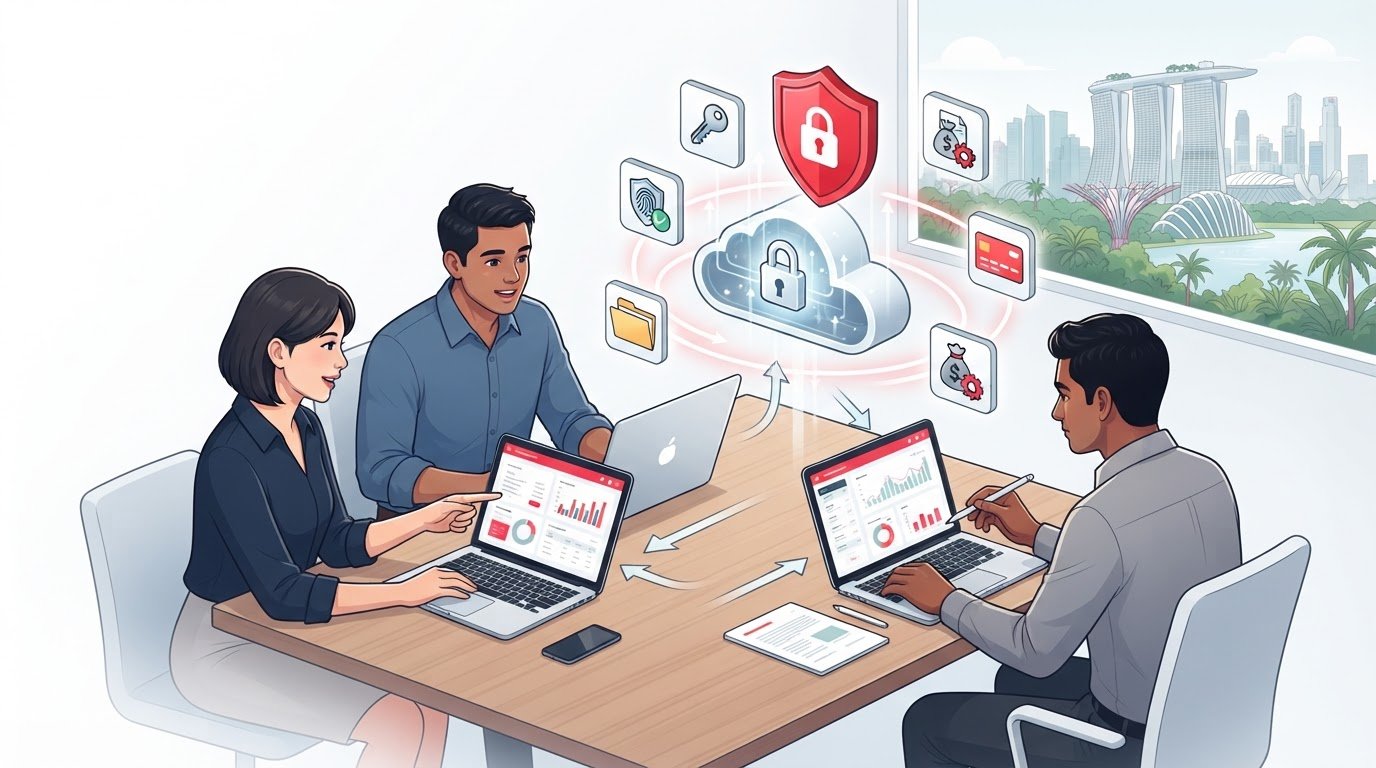
What if the biggest risk in outsourcing your accounts isn’t the technology, but uncertainty about who can access your financial data? For Singapore SMEs, payroll details, bank records and business accounts need careful protection wherever they’re handled. Data security for outsourced accounting services is best assessed through clear, reviewable controls, not reassurance alone.
It’s reasonable to be cautious about giving an external team access to sensitive records. You may want to know where information is stored, who can view or share it, and what happens if something goes wrong. You don’t need a technical background to ask useful questions or compare arrangements.
This checklist helps you identify common risks in outsourced accounting workflows and assess how access, storage and sharing are managed. It also covers the responsibilities to agree on before transferring records, so both sides understand their part in protecting them. A shared approach can bring greater clarity to cloud accounting and outsourced finance support.
Key Takeaways
- Map the financial records involved, from invoices and bank details to tax and payroll information, to understand what needs protection.
- Use the data security for outsourced accounting services checklist to review access, authentication, secure transfers and timely removal of access.
- Compare arrangements by clarifying who owns access decisions and how data sharing, retention, subcontracting and service exit are handled.
- Agree on information responsibilities and oversight before sharing records, so both sides understand their role in the workflow.
- Plan cloud accounting and bookkeeping workflows with clear responsibilities and information-handling processes.
Why data security matters when outsourcing accounting services
Data security in an outsourced accounting relationship means protecting financial and personal information as it’s collected, accessed, used, shared and retained by your business and its service team. Security depends on more than the accounting platform. File transfers, connected applications, user accounts and day-to-day handling all affect how information is protected. This plain-English overview of data security explains the broader aim: preventing unauthorised access, use or disclosure.
For a Singapore SME, records may pass through cloud bookkeeping, payroll processing and tax workflows. Outsourcing changes who handles those records, but your business still needs to understand the process and maintain oversight. Clear responsibilities help both sides handle information consistently.
Which accounting records need careful handling?
Ledgers and invoices show how the business earns and spends money. Other records can reveal more: bank details support payments, tax documents contain business and sometimes personal information, and payroll files may include employee identifiers, salary details and payment information. Treat payroll with particular care because it combines employment and financial data. Classify information according to the records your business uses and the requirements that apply to it.
Where can security risks emerge in outsourced workflows?
Trace a record from the moment your team uploads it, through bookkeeping entry, review and reporting, to its eventual retention or disposal. Each hand-off may involve a person, account, shared folder or integration. Risks can arise when permissions are broader than a role requires, a file goes to the wrong recipient, or an account remains active after someone changes roles or leaves. Assigning responsibility for each step makes these points easier to oversee.
Outsourcing risk follows the data: every access point, transfer and account change needs a clear owner. Map which people need which records, how information moves between systems, and who updates access when responsibilities change. This connects security to everyday work instead of treating it as a separate technical issue. Count On Me’s cloud accounting and bookkeeping services support SME finance workflows, where coordination around records and responsibilities is part of a considered outsourced relationship.
What safeguards should outsourced accounting services use?
When assessing data security for outsourced accounting services, look for safeguards you can document and review, rather than broad assurances. Written arrangements should explain who gets access, how files move, how activity is recorded and what happens if systems or accounts are disrupted. These details give your team a practical basis for oversight without requiring you to assess every technical detail yourself.
Start with least-privilege access: each person should be able to view or change only the information needed for their role. Ask how authentication is managed, including whether multi-factor authentication is used, and how access is removed when someone leaves or changes responsibilities. Encryption can help protect information in transit or storage, while backups and activity logs can support recovery and review. Document the scope of these measures and how they operate.
How should access and information sharing be controlled?
Named accounts make it easier to link activity to a person than shared logins do. Role-based permissions can limit access to relevant records, while periodic reviews can identify permissions that are no longer needed. Agree on secure channels for sending documents instead of relying on personal email or informal file-sharing accounts. Document who handles account changes, departures and suspected credential compromise, and how access is restricted or reviewed.
Limited access, backed by regular review, gives both sides clearer oversight of sensitive records. The IRS guidelines for data security offer a reference for tax professionals, but US guidance is not Singapore legal advice.
What should a continuity and incident plan cover?
Set out how backups are managed, who is responsible for restoration, and how accounting work can continue if a system becomes unavailable. Clarify how a suspected incident is escalated, when your business is notified, what information is shared, and how both teams will cooperate. Agreeing these details in advance makes it easier to coordinate a response.
Recovery targets and notification timelines depend on the contract. Record the agreed expectations and revisit them as workflows change. Don’t assume a general promise sets a precise deadline. These discussions also help define responsibilities in cloud accounting and bookkeeping workflows.
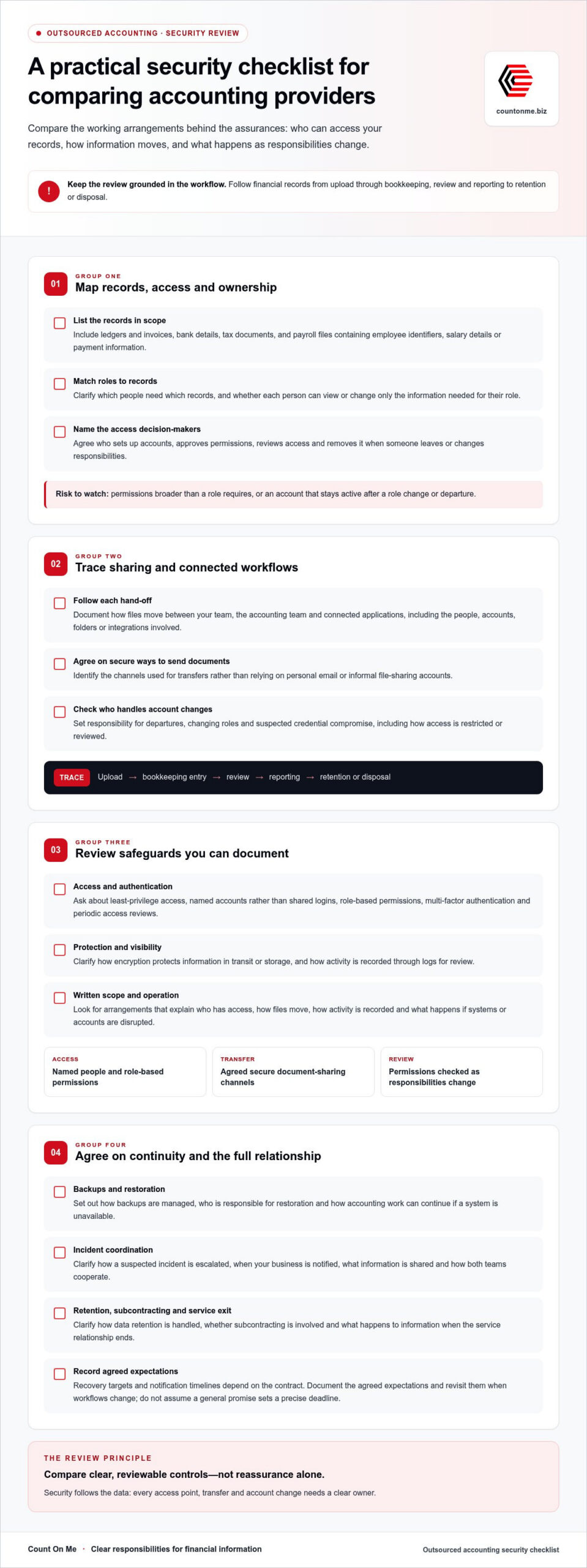
How to compare outsourced accounting providers: a security checklist
A useful comparison goes beyond security promises to the working arrangements you can understand and review. Focus on ownership: who can access records, who approves changes, and how information is handled throughout the relationship. There isn’t one control set for every SME, so assess whether the arrangements fit your records, workflows and responsibilities.
Use these steps to structure your review:
- Map access and ownership. Identify which roles need which records, who sets up accounts, and who approves or removes permissions. Clarify how access is reviewed when responsibilities change.
- Trace sharing and integrations. Document how files move between your team, the accounting team and connected applications. Establish which channels are used and who checks recipients and manages system connections.
- Set expectations for subcontracting. Record whether other parties may handle information, for what purpose, and how confidentiality and access responsibilities are managed. Keep oversight arrangements clear.
- Agree on retention and exit. Set out how long records are retained, how they’re returned or deleted when the relationship ends, and who coordinates each step. Consider how you’ll maintain access to records needed for business continuity.
- Document communication and review. Define how routine questions, corrections, access changes and security concerns are raised. Regular reviews give both sides an opportunity to update arrangements when workflows or team roles change.
Which questions clarify access and accountability?
Make responsibilities specific. Who can view payroll files or bank records, and for which tasks? Who approves new accounts, record corrections and permission changes? How will you receive updates and raise concerns? Clear answers help you retain practical oversight without managing every bookkeeping task yourself.
What should the service agreement say about data?
Review written terms for permitted uses, confidentiality, retention, return and deletion. Include responsibilities for incident communication and cooperation, and agree on response timelines in the contract. For Singapore-specific obligations, consult current official guidance, including relevant Personal Data Protection Commission resources, and seek appropriate advice where needed.
Security is one part of choosing a finance workflow. Consider it alongside integrations, access for your team and how records are managed in cloud accounting services in Singapore.
How Count On Me supports a considered outsourced accounting relationship
Good planning makes it easier to bring an external accounting team into your finance workflows while keeping sight of who handles what. Count On Me provides cloud accounting and bookkeeping services for Singapore SMEs, alongside payroll and tax support. Discussing processes and responsibilities clearly helps your team understand how financial information supports everyday tasks.
How can a business prepare for an outsourced accounting arrangement?
Before planning the service, gather a practical picture of your current setup. You don’t need a technical report; a clear working inventory is a useful start:
- Systems and records: Note the accounting platforms and connected tools in use, plus records such as ledgers, invoices, bank information, tax documents and payroll files.
- People and approvals: List current users, their responsibilities, and who approves payments, payroll changes, journal entries or corrections.
- Recurring workflows: Outline how bookkeeping records are collected, how payroll information is prepared, and how tax-related records are organised.
- Communication: Agree how routine questions, unusual transactions, exceptions and access changes will be raised and tracked.
This preparation helps both teams discuss the actual flow of information rather than rely on assumptions. For payroll, map what employee information is used and where decisions or approvals sit. You can also explore how payroll management services fit into the wider finance workflow.
What does a collaborative service relationship look like?
Clear roles don’t mean every task sits with one side. Your team may provide source documents and approve key transactions, while accounting professionals handle agreed bookkeeping and reporting tasks. The division depends on the arrangement, so discuss who prepares, reviews and approves each step, and how questions or changes are communicated.
That shared understanding is central to data security for outsourced accounting services. As you plan the service, discuss how records are handled in each workflow, what oversight your team needs, and how responsibilities will be revisited if systems or roles change. Transparent processes and regular communication make the arrangement easier to understand than broad assurances about security.
Explore Count On Me’s accounting and business support services to see how they can fit into your finance workflows.
Make security part of your next finance decision
Turn your checklist into a shared working plan. Before records start moving, agree on who is responsible for each part of the finance workflow, how changes will be communicated, and when you’ll revisit those arrangements. This gives your team a practical way to stay involved as the business, its systems and its needs evolve.
Choosing data security for outsourced accounting services isn’t about finding a one-size-fits-all answer. It’s about building a relationship where responsibilities are understood and important questions can be discussed openly. Count On Me supports Singapore SMEs with cloud-based accounting and bookkeeping, alongside finance, payroll, tax and advisory services. The firm was founded by professionals with over 20 years of industry experience.
A thoughtful start can make outsourced finance feel more manageable. Explore an arrangement that fits your workflows and gives your team clarity about its role.
With clear communication and shared oversight, you can move forward with greater confidence in how your financial information is handled.
Frequently Asked Questions
Is it safe to outsource accounting services?
It can be a sound option when the arrangement fits your business and responsibilities are clear, but no outsourcing setup is risk-free. Before sharing records, understand what information the work requires and how the service relationship handles it. For example, you might begin with bookkeeping records, then consider separately whether payroll files or bank-related documents need a different workflow. Treat data security for outsourced accounting services as an ongoing part of managing the relationship, not a one-time decision.
Can an outsourced accountant access my business bank account?
Access depends on the permissions you grant and the tasks in your arrangement. Outsourcing bookkeeping doesn’t automatically require giving someone full banking access. If a workflow requires bank information, distinguish viewing transactions from initiating or approving payments. Keep payment authority with designated people in your business where appropriate, and review your bank’s account-user options. Never share a personal login. Record who has access and revisit it if duties change.
How should accounting files be shared securely with an outsourced provider?
Use an agreed business file-sharing or accounting workflow rather than personal email accounts or consumer messaging apps. Before sending a file, check the recipient and whether the attachment contains more information than the task needs. A bookkeeping query, for example, may require an invoice, not an entire folder of employee records. If a file goes to the wrong person, act promptly to limit further access and follow the agreed reporting process.
What happens if financial data is exposed during outsourced accounting?
Report the concern through the agreed contact route and share what you know, such as which file or account may be affected and when you noticed it. The teams can then coordinate steps such as securing affected access, preserving relevant records and assessing the information involved. In Singapore, whether a personal data breach must be notified depends on the PDPA’s assessment criteria. Document decisions and obtain appropriate advice where needed.
Who owns accounting data when a business outsources bookkeeping?
Ownership and control should be addressed in the service agreement, rather than assumed from who operates the accounting platform. Clarify which records belong to your business, whether the provider may use them only to perform agreed work, and how you can obtain copies during or after the arrangement. Also consider records created during the work, such as reconciliations or reports, and define how these will be made available if you change systems or end the service.
Does Singapore’s PDPA apply to outsourced accounting data?
Yes, the PDPA may apply where accounting records contain personal data, such as employee names, identification details or salary information. It doesn’t apply to every business record simply because it is financial. Obligations depend on the parties’ roles and the circumstances of the processing. Identify personal data in your workflows and refer to current Personal Data Protection Commission guidance to understand relevant responsibilities, including whether breach notification requirements may be triggered.