
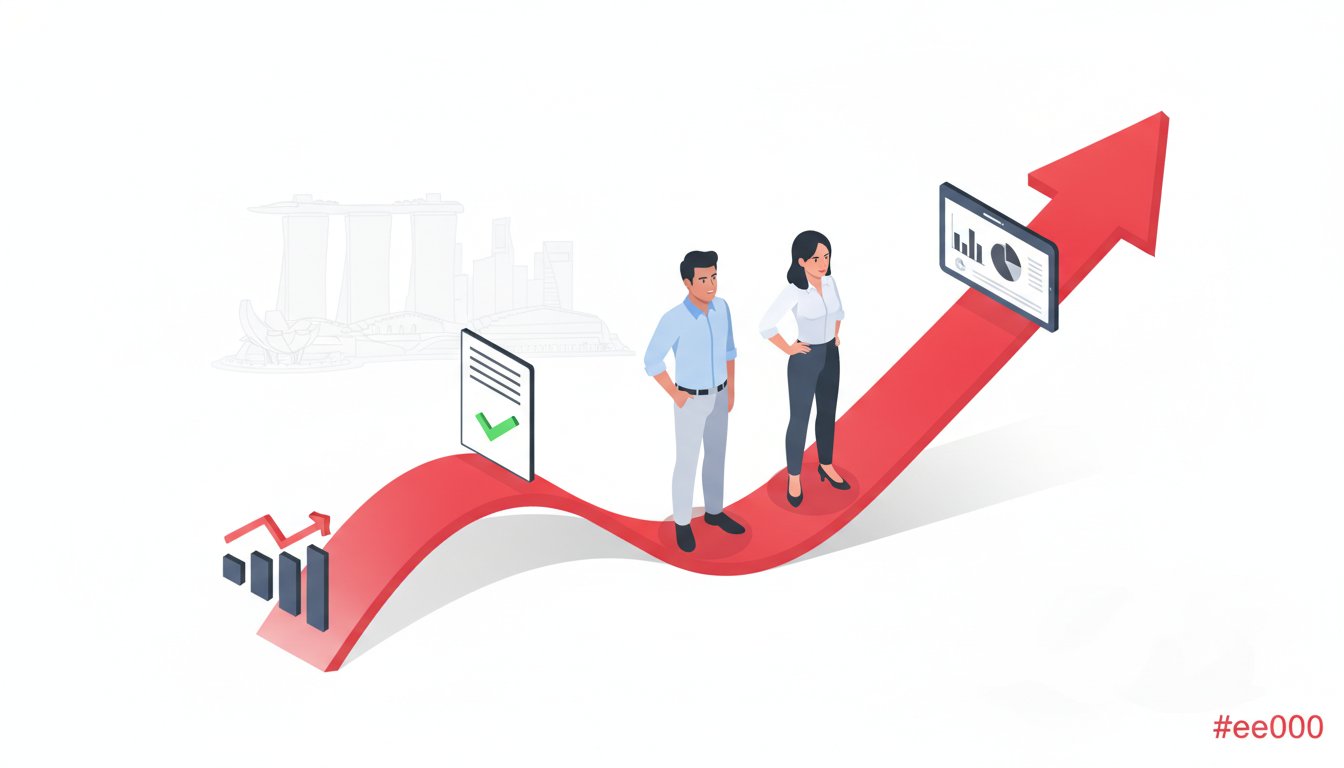
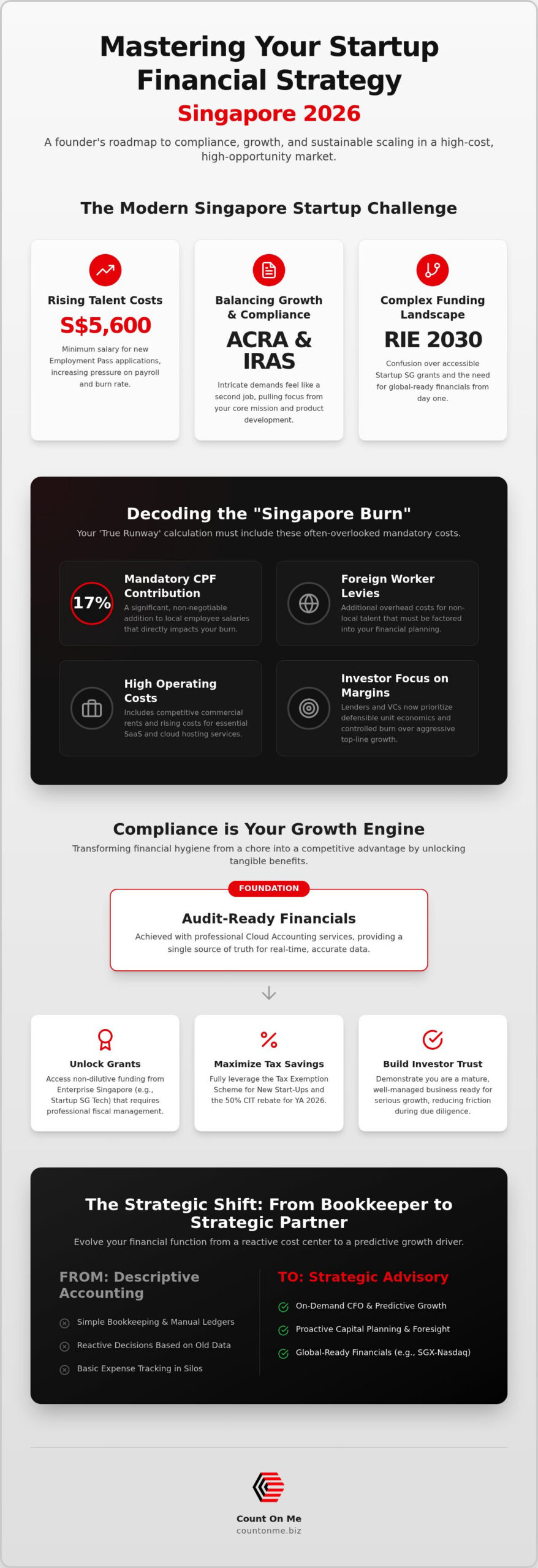
What if your compliance checklist was actually your most effective fundraising tool? In a market where the minimum salary for an Employment Pass has reached S$5,600 and the local talent pool is increasingly expensive, a robust startup financial strategy Singapore is no longer just about survival. It’s your primary competitive advantage. We understand the weight of balancing a high burn rate with the intricate demands of ACRA and IRAS. It often feels like a second job that pulls you away from your actual mission. You aren’t alone in feeling confused about which Startup SG grants are truly accessible or how to navigate the 2026 tax landscape without missing out on critical savings.
This guide is your roadmap to financial clarity and stability. We’ll show you how to master frameworks for cash flow management, leverage non-dilutive grants like Startup SG Tech, and ensure your growth is entirely compliance-driven. We’re going to explore how to extend your cash runway, prepare audit-ready statements, and use the 50% CIT rebate for YA 2026 to your full advantage. By the end, you’ll have a clear plan to turn financial complexity into a streamlined engine for scaling. Let’s look at how you can build a foundation that is as innovative as the products you’re creating.
Key Takeaways
- Learn how to align your accounting with the RIE 2030 landscape to build a foundation that supports aggressive scaling.
- Identify the hidden drivers of the “Singapore Burn,” such as mandatory CPF contributions, to calculate a truly sustainable cash runway.
- Discover how audit-ready records unlock non-dilutive Enterprise Singapore grants and maximize your retained earnings through the Tax Exemption Scheme for New Start-Ups.
- See why an on-demand CFO is the missing link in your startup financial strategy Singapore, moving you from simple bookkeeping to predictive growth.
- Transition from descriptive accounting to strategic advisory, giving you the foresight needed to navigate Singapore’s competitive 2026 ecosystem.
Building a Robust Financial Foundation in Singapore’s 2026 Ecosystem
A winning startup financial strategy Singapore is more than just a spreadsheet of expenses. It’s the deliberate alignment of your accounting, regulatory compliance, and growth capital. Think of it as the architectural blueprint for your business. Without a solid base, even the most innovative tech product can crumble under the weight of scaling costs or regulatory scrutiny. We see strategy as a bridge between your current burn rate and your future valuation.
As we move through 2026, the stakes are higher than ever. The S$21.9 billion Research, Innovation and Enterprise (RIE) 2030 plan has flooded the market with opportunity, but it has also raised the bar for financial hygiene. Government agencies like Enterprise Singapore prioritize startups that demonstrate professional fiscal management. Adopting a “Compliance-First” mindset isn’t just about staying out of trouble with ACRA or IRAS; it’s about building a brand that investors can trust without hesitation. It’s a trust signal that tells the market you’re ready for serious growth.
The 2026 Singapore Startup Landscape
The current ecosystem is defined by massive public investment and sophisticated exit pathways. With the RIE 2030 initiative driving sector-specific funding, startups in AI and Deep Tech face unique reporting requirements, especially when claiming R&D tax credits. Additionally, late-stage companies are now looking at the SGX-Nasdaq dual listing bridge as a viable path for international expansion. This requires your financial strategy to be global-ready from day one, moving far beyond basic bookkeeping into the territory of strategic capital planning. You need to be prepared for the scrutiny of international markets before you even apply for your first major grant.
Cloud Accounting as the Baseline
Relying on manual ledgers or static spreadsheets is a recipe for disaster in a fast-moving market. Transitioning to professional cloud accounting services Singapore is now the minimum requirement for operational efficiency. Real-time visibility into your cash position allows you to make decisions based on what’s happening now, not what happened three weeks ago. By integrating payroll and expense management into a single digital source of truth, you eliminate data silos and ensure your financial records are always audit-ready. It’s about having the right tools to act with quiet confidence when a growth opportunity arises, ensuring you never miss a beat because of messy paperwork.
Optimizing Cash Runway and Burn Rates in a High-Cost Market
Navigating the high-cost environment of Singapore requires a precise touch. The “Singapore Burn” is a very real challenge for founders. It isn’t just about high commercial rents or competitive salaries. It’s the mandatory 17% CPF contribution for local employees and the foreign worker levies that often catch founders off guard. When building your startup financial strategy Singapore, you need to calculate your “True Runway.” This calculation must include every hidden cost that doesn’t show up on a basic expense sheet. In 2026, lenders and investors are prioritizing unit economics over aggressive top-line growth. If you want to qualify for venture debt, your margins need to be defensible and your burn must be controlled.
Managing variable costs is equally critical in a high-inflation environment. We’ve seen SaaS subscriptions and cloud hosting costs rise significantly over the last year. Regularly auditing these “micro-burns” can save you thousands of dollars annually. This financial discipline is what separates startups that survive from those that thrive within Singapore’s innovation investment strategy. By keeping a tight grip on your overheads, you position yourself to take advantage of the stable, well-funded ecosystem that the EDB and other agencies have built.
Managing Personnel and Payroll Costs
Your team is your greatest asset, but they’re also your largest expense. Optimizing payroll management Singapore helps you avoid costly compliance penalties and ensures you’re leveraging all available tax deductions. We often suggest balancing a lean core team with strategic outsourcing for specialized roles like corporate secretarial work or finance. This keeps your overhead flexible. Automating your salary disbursements through cloud tools also reduces the administrative burn that eats into your time. If you’re looking for ways to streamline these costs, our specialized startup package offers a great way to get professional support without the full-time price tag.
Scenario Planning for Volatile Markets
You can’t rely on a single forecast when the market is shifting. We recommend creating “Base Case,” “Best Case,” and “Survival” models to prepare for any outcome. Use real-time data from your cloud accounting software to see exactly when you’re drifting from your plan. In the context of Singaporean commercial overheads, your burn rate is the total monthly net negative cash flow generated by your operations, including rent, tech stacks, and those essential CPF contributions. Having these models ready allows you to pivot your spending before your runway hits the “red zone,” giving you the quiet confidence to lead your team through any storm.
Leveraging Singapore’s Tax Incentives and Grants for Non-Dilutive Growth
Non-dilutive capital is the ultimate prize for any founder. In our experience, a successful startup financial strategy Singapore treats government incentives as a strategic asset class rather than just a bonus. To unlock this, your first step is maintaining audit-ready books. Enterprise Singapore and other agencies require transparent, professional records before they’ll commit to support. By utilizing the Tax Exemption Scheme for New Start-Ups (SCTE), you can maximize your retained earnings during those crucial first three years. We also recommend strategically timing your applications for grants like Startup SG Founder or Tech to coincide with your private funding rounds. This approach creates a multiplier effect on your capital. Finally, ensure your tax compliance services Singapore are proactive. Waiting until the filing deadline to look for R&D tax incentives is a common mistake that leaves money on the table.
Maximizing Tax Efficiency
Currently, qualifying startups receive a 75% tax exemption on the first S$100,000 of normal chargeable income. This is a massive boost to your bottom line. However, many founders fall into startup accounting mistakes Singapore, such as misclassifying expenses that could have been claimed under R&D incentives. We also find that GST registration can actually improve cash flow for export-oriented startups. Even if you haven’t hit the S$1 million turnover threshold, voluntary registration allows you to claim back GST on your inputs, which is essentially a 9% discount on your local business costs.
Grant-Ready Financial Reporting
Government auditors aren’t just looking at your bank balance; they’re looking at your governance. Your corporate secretary plays a vital role here by maintaining the statutory records required for due diligence. Clean records are especially important if you’re eyeing Startup SG Equity top-ups as part of your Series A preparation. When your books are in order, the path to non-dilutive growth becomes much smoother. It gives you the quiet confidence to tell your story to both the government and private investors.
Explore our specialized startup package for grant-ready accounting
Scaling Your Startup with On-Demand CFO and Strategic Advisory
Scaling isn’t just about hiring more developers or increasing your ad spend. It’s about ensuring your infrastructure can handle the weight of your success. This is where a fractional on demand CFO Singapore becomes your secret weapon. You get high-level expertise without the heavy S$20,000 monthly salary of a full-time executive. Developing a robust startup financial strategy Singapore helps you move from descriptive accounting, simply recording what already happened, to predictive strategy. By looking forward, you can anticipate cash flow gaps and identify growth opportunities before they pass you by.
Your startup financial strategy Singapore should be a holistic ecosystem. It isn’t enough to have separate silos for your taxes, corporate secretarial filings, and bookkeeping. When these functions are integrated, you get a 360-degree view of your business health. This unified approach makes preparing your “Data Room” for venture capital due diligence much easier. Instead of scrambling for documents, you’ll have everything organized, showing investors that you’re a mature, reliable partner.
When to Move Beyond Basic Bookkeeping
If you’re starting to deal with multi-currency transactions or complex revenue recognition, a simple ledger won’t cut it anymore. These are clear signs you’ve outgrown basic bookkeeping. Count On Me services bridge this gap, providing the sophisticated oversight you need between your seed and scale stages. We assist with cap table management and ESOP structuring, ensuring your equity remains a powerful tool for attracting talent without creating a legal headache later on.
Preparing for Your Next Funding Round
Financial due diligence is essentially a trust-building exercise where venture capitalists verify that your numbers match your narrative. We use detailed financial forecasting to help you justify your valuation during tough negotiations. By creating a “Finance Roadmap” that mirrors your product roadmap, we show investors exactly how their capital will be deployed to hit specific milestones. It’s about providing the quiet confidence that your growth is planned, measurable, and sustainable.
Building Your Scaling Engine for 2026 and Beyond
We’ve explored how your financial foundation connects directly to the RIE 2030 landscape and why managing your “True Runway” is vital in Singapore’s competitive talent market. For fintech startups, securing specialized leadership through Mark Loucas Ltd can be a key part of this strategy, ensuring you hire right the first time. By now, you should see that audit-ready records aren’t just a requirement for compliance; they’re the keys to unlocking non-dilutive grants and maximizing tax efficiency. A proactive startup financial strategy Singapore moves you from reactive bookkeeping to predictive growth. It’s about having the quiet confidence to make bold moves during VC negotiations.
Our team is here to act as your supportive ally, offering everything from Xero-certified digital transformation to on-demand CFO support that scales alongside your business. We take the weight of ACRA and IRAS compliance off your shoulders so you can focus entirely on your mission. Whether you’re navigating complex payroll or preparing a data room for Series A, we provide the stability and expertise you need to thrive. You’ve built something incredible, and we’re ready to help you protect it.
Explore our specialized Startup Package and scale with confidence
Your vision deserves a financial foundation as innovative as your product. Let’s build that bridge together.
Frequently Asked Questions
What are the main components of a startup financial strategy in Singapore?
Accounting, compliance, and growth capital are the core pillars you need to align. A successful startup financial strategy Singapore integrates these with proactive tax planning and grant leveraging to ensure long-term viability. It’s about more than just tracking your expenses; it’s about aligning your fiscal roadmap with your operational milestones and investor expectations to build a scalable engine.
How much does it cost to outsource accounting for a Singapore startup?
Fees for outsourced services usually depend on your transaction volume and the complexity of your reporting needs. While we don’t provide fixed industry averages here, many founders find that outsourcing is significantly more cost-effective than hiring a full-time in-house team. It’s best to look for a partner who offers scalable packages that grow alongside your business as you move from seed to scale.
When should a Singapore startup register for GST?
You must register for GST if your taxable turnover exceeds S$1 million at the end of any calendar year or is expected to exceed it in the next 12 months. However, voluntary registration is often beneficial for startups that export services. It allows you to claim back the 9% GST paid on local business expenses, which can provide a helpful boost to your monthly cash flow.
Can a fractional CFO help with Startup SG grant applications?
Yes, a fractional CFO is instrumental in preparing the rigorous financial models and projections required for Startup SG Tech or Equity applications. They ensure your data is “grant-ready” by aligning your financial narrative with specific government requirements. This strategic oversight significantly improves your chances of securing non-dilutive funding while maintaining a lean, efficient operational structure during the early stages of growth.
What is the most common financial mistake Singapore founders make?
The most frequent error is neglecting “financial hygiene” until just before a funding round or audit. Messy books lead to missed tax incentives and can delay due diligence for months. By maintaining clean, real-time records from day one, you build investor trust and avoid the “red zone” where cash flow issues become terminal. It’s much easier to scale when your foundation is already solid.
How does the SCTE tax exemption work for new companies in 2026?
Qualifying startups receive a 75% tax exemption on the first S$100,000 of normal chargeable income and a 50% exemption on the next S$100,000 for their first three years of assessment. This incentive is a cornerstone of a startup financial strategy Singapore, helping you retain more earnings to reinvest into scaling your operations. It’s a powerful tool for maximizing your runway without needing immediate external capital.