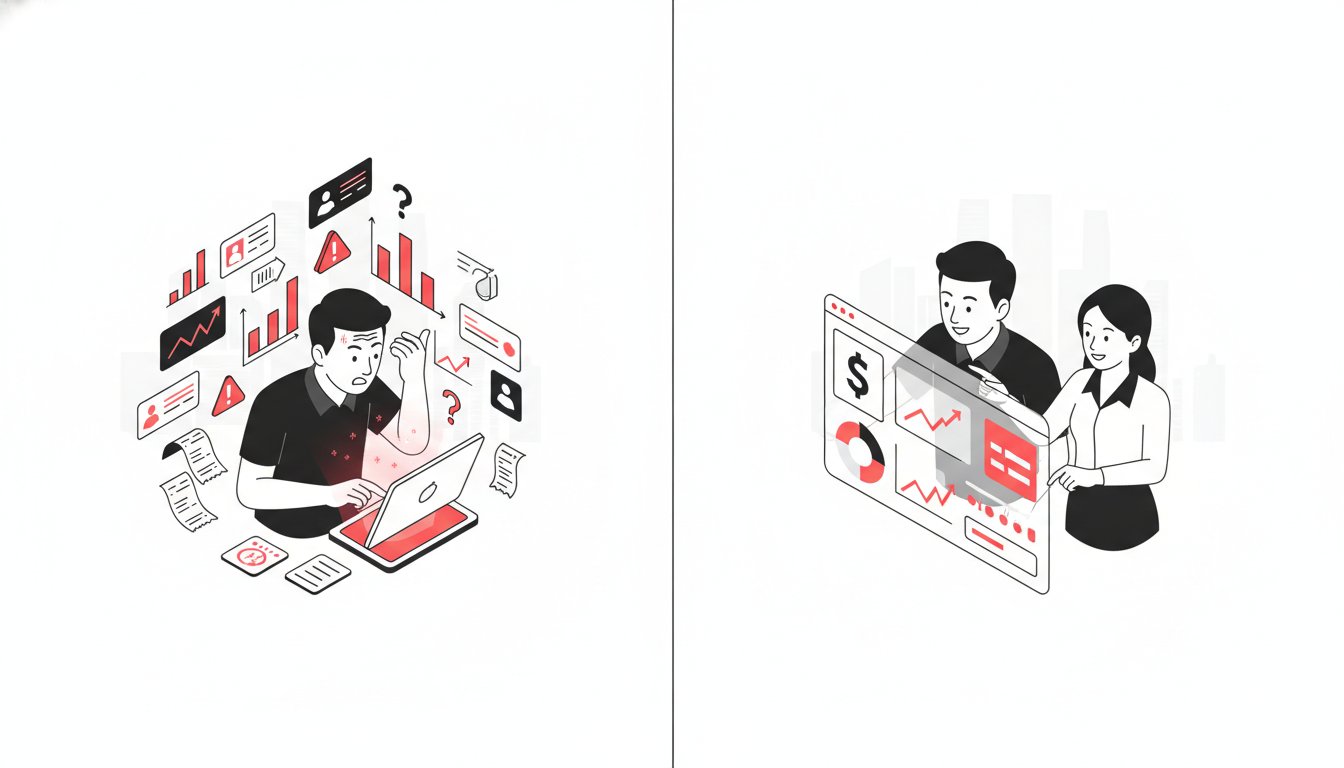
What if the S$39 monthly software subscription you bought to save money is actually costing your Singapore SME thousands in lost time and compliance risks? It’s a question many founders face as they stare at a dashboard full of unreconciled transactions and confusing tax settings. You’ve likely felt the push to digitize, especially with the 2026 InvoiceNow mandates and the 9% GST rate requiring tighter records than ever before. It’s easy to assume that a modern app is a total solution, but software is only as good as the person steering it.
We understand the frustration of spending your Sunday nights on manual data entry instead of strategic planning. This guide clarifies the cloud accounting service vs software Singapore debate, helping you discover whether a DIY subscription or a managed service is the right strategic move for your business. We’ll look at the real ROI of each path, how to leverage the PSG grant for up to 50% co-funding, and exactly how to build a compliant, automated finance function that gives you the freedom to focus on growth.
Key Takeaways
- Understand why the right choice of cloud accounting service vs software Singapore depends on balancing your need for digital tools with the necessity of expert oversight.
- Learn how to navigate the 2026 InvoiceNow mandates so it’s easier to stay compliant with the latest IRAS and ACRA digital standards.
- Discover how you’ll leverage the Productivity Solutions Grant (PSG) to co-fund your transition to automated cloud platforms like Xero.
- Identify the hidden costs of DIY manual entry and how a managed service helps you reclaim time for high-level business scaling.
- Explore how moving beyond basic bookkeeping to on-demand CFO advisory can help you optimize your cash flow and long-term financial stability.
Cloud Accounting Service vs Software: Understanding the Core Difference
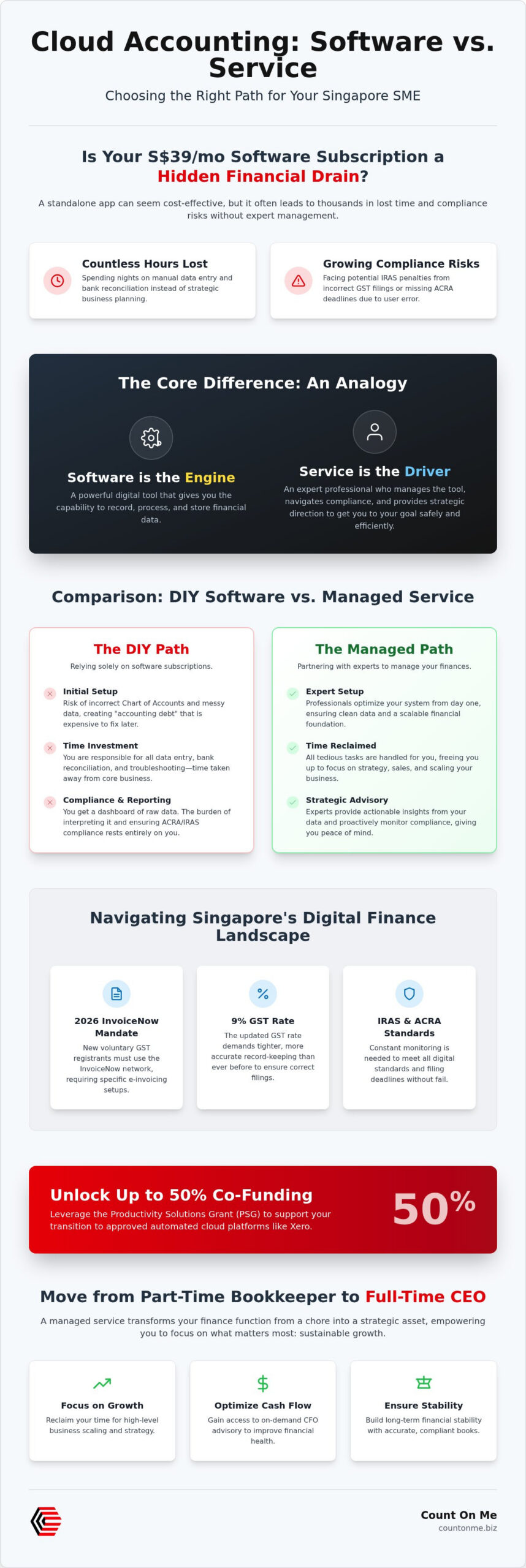
When you’re looking to modernize your business finances, it’s easy to get caught in the cloud accounting service vs software Singapore debate. Many founders start by thinking these two things are the same. They aren’t. To understand the difference, think of your accounting setup like a high performance vehicle. The software is the engine, the sophisticated machinery that makes movement possible. The service, however, is the professional driver who knows the shortcuts, avoids the traffic jams, and ensures you reach your destination safely and on time.
At its most basic level, what is cloud accounting software? It is a digital tool designed to record, process, and store your financial transactions in the cloud. It replaces the dusty ledgers and clunky desktop programs of the past. By 2026, Singapore’s digital standards have moved far beyond simple data entry. With the 9% GST rate and the mandatory rollout of InvoiceNow for new voluntary registrants, your software needs to be more than just a digital shoebox for receipts. It needs to be a real time compliance engine.
However, simply owning the tool doesn’t mean your books are accurate. This is why many Singapore SMEs are shifting toward managed digital services. They’ve realized that while the software provides the data, the service provides the meaning, the strategy, and the peace of mind that ACRA and IRAS requirements are being met without fail.
The Software-Only Approach (DIY)
Choosing a DIY software subscription is often the first step for micro businesses. It offers a low entry cost and immediate access to powerful platforms like Xero or QuickBooks. It’s a great way to start, but the burden of every single entry falls on you. You’re the one matching bank feeds at midnight and trying to figure out if a specific expense is tax deductible. If you have very low transaction volumes, this might work for a while. But as you scale, the risk of human error grows, and the time you spend on “admin” is time you aren’t spending on your customers.
The Managed Service Approach (Outsourced)
A managed service is a partnership. Instead of you struggling with the settings, professional accountants manage the cloud software on your behalf. We don’t just “do the books”; we look at the big picture. This approach includes high level advisory, proactive tax planning, and constant compliance monitoring. It transforms your finance function from a chore into a strategic asset. By letting experts handle the technical nuances of cloud accounting service vs software Singapore, you finally get to function as a CEO rather than a part time bookkeeper. It’s about moving from “just getting by” to “scaling with confidence.”
This shift toward professional support is a global trend for growing companies; you can explore Monthly fixed-fee accounting and advisory packages options to see how firms like Proledger help businesses manage their finances with predictable, expert-led solutions.
Similarly, for entrepreneurs with interests in the UK, RS Bookkeeping and Accounting provides professional bookkeeping and accounting services designed to ensure full compliance and strategic financial health.
Comparison: DIY Software vs Managed Cloud Accounting Service
Choosing between a standalone app and a dedicated partner often comes down to how you value your time. When you evaluate cloud accounting service vs software Singapore, it’s easy to look at the monthly subscription fee of a tool and think you’re saving money. But the real cost of DIY isn’t the software price; it’s the hours you spend troubleshooting bank feeds or worrying if your GST filings are actually correct. A managed service takes that weight off your shoulders.
Initial setup is where most DIY users stumble. Without professional guidance, your chart of accounts might not capture the specific data you need for strategic growth. This creates “accounting debt” that eventually requires an expensive cleanup. On the other hand, a managed service ensures your system is optimized for the latest innovations in finance and accounting, like automated workflow triggers and deep data analytics. This professional oversight significantly reduces the risk of human error, protecting you from potential IRAS penalties or ACRA filing delays.
Feature Comparison for Singapore Businesses
Modern platforms offer incredible tools, but they require a steady hand to operate. Here is how they stack up in a local context:
- Direct Bank Feeds: While software provides the connection, a service ensures your bank reconciliations are done daily, not just once a month.
- InvoiceNow Compliance: As of April 2026, new voluntary GST registrants must use the InvoiceNow network. A service provider ensures your e-invoicing settings meet these specific government mandates.
- Real-Time Reporting: Software gives you a dashboard; a service gives you insight. Instead of waiting for a monthly closing cycle, you can see your true cash flow position whenever you need it.
The Decision Matrix: Which One Fits Your Stage?
If you’re a pre-revenue startup, a DIY software approach might be enough to track your initial burn rate. However, once you start hiring or dealing with complex GST transactions, the complexity grows. Most growing SMEs find that the “hidden costs” of DIY, such as manual data entry and compliance anxiety, outweigh the cost of professional help. Moving to a managed service at this stage isn’t just about outsourcing; it’s about upgrading your business intelligence. Understanding the broader landscape of digital finance transformation Singapore SMEs are undergoing can help you make a more informed decision about when to make this move. If you’re looking for a balance between cost and expertise, you might explore Affordable Accounting Services in Singapore to find a plan that scales with you. We’re here to help you bridge that gap, ensuring your finance function is a source of strength, not stress.
Evaluating the Best Cloud Accounting Software in Singapore for 2026
Picking the right platform feels like a big commitment, but it’s really about finding the best fit for your unique workflow. In the cloud accounting service vs software Singapore landscape, Xero remains the gold standard for most SMEs. We often recommend it because of its deep integration with the Singaporean business ecosystem. It doesn’t just record numbers; it talks to your bank, your customers, and even the taxman. With its certified expertise, it’s built to handle the 9% GST rate and the 2026 InvoiceNow requirements with ease.
QuickBooks Online is another strong contender. It’s often praised for its intuitive interface and robust reporting. However, some local businesses find its regional support less tailored than Xero’s extensive Singapore network. We’re also seeing a rise in local fintech-integrated platforms that offer built-in corporate cards. These are excellent for tech-heavy startups, but they sometimes lack the depth required for complex IRAS tax reporting. Your choice should ultimately hinge on three things: the user interface, the depth of integrations, and guaranteed IRAS compatibility.
Key Features Every Software Must Have
You need tools that actually save you time. First, look for seamless integration with major Singapore banks like DBS, OCBC, and UOB. Manual bank reconciliation is a relic of the past. You want transactions to flow into your ledger automatically every morning. Second, multi-currency support is vital if you’re eyeing regional expansion. Finally, mobile accessibility is a must. Being able to snap photos of receipts on the go prevents that stressful end-of-month pileup of paperwork.
Integration with Corporate Secretarial Services
Your accounting data shouldn’t live in a vacuum. One of the biggest advantages of a modern cloud setup is how it feeds into your wider compliance obligations. For example, the financial data in your software directly informs your annual return filings with ACRA. A unified digital ecosystem reduces the friction between your bookkeeping and your legal requirements. This synergy is why we focus on digital automation. When your accounting and corporate secretarial functions are in sync, you avoid the “data silos” that lead to filing errors.
If you’re curious about how this fits into your overall business structure, check out The Essential Guide to Corporate Secretary Services in Singapore. It’s about creating a seamless flow that keeps you compliant while you focus on scaling. We’re here to help you bridge the gap between these different functions, ensuring your business runs like a well-oiled machine.
Compliance Checklist: ACRA, IRAS, and Digital Standards
Staying compliant in Singapore isn’t just about avoiding fines; it’s about building a foundation that investors and banks can trust. When weighing a cloud accounting service vs software Singapore, the “software” part of the equation must start with the IRAS Accounting Software Register+. Using a certified platform ensures your system can generate the IRAS Audit File (IAF) and handle the 9% GST rate accurately. However, the software won’t tell you if you’ve categorized a transaction incorrectly. That’s where professional oversight prevents the kind of “DIY” reporting errors that trigger unwanted audits.
The digital landscape has shifted significantly as of April 1, 2026. All new voluntary GST registrants are now required to use the InvoiceNow e-invoicing network. This isn’t just a suggestion; it’s a mandate designed to move Singapore toward a fully digital economy. While your software might be “InvoiceNow ready,” setting up the connection and ensuring every invoice flows through the network correctly requires a methodical approach. We make sure this digital handshake happens perfectly every time, so you don’t have to worry about technical friction.
Deadlines are the other half of the compliance battle. For non-listed companies, ACRA requires annual returns to be filed within seven months of your financial year end. It’s easy for a busy founder to miss this window. A managed service provider acts as your early warning system, ensuring your books are closed and your filings are submitted long before the deadline looms. We believe compliance should be a quiet, background process, not a last-minute scramble.
IRAS and Tax Compliance Requirements
Preparing your Corporate Tax filing (Form C-S or Form C) is much smoother when your data lives in the cloud. You can pull the necessary figures with a few clicks, but you still need to account for nuances like withholding tax when paying international service providers. In 2026, IRAS compliance means using digital tools that offer seamless, end-to-end transaction transparency through the InvoiceNow network and Register+ certified software. If you want to ensure your tax strategy is as robust as your software, you can explore our tax compliance and advice services to keep your business fully protected.
Avoiding Common Startup Accounting Mistakes
Many founders fall into the trap of commingling personal and business expenses in the early days. It might seem harmless, but it creates a nightmare for your clean-up later. Perhaps the biggest red flag for potential investors is “Excel accounting.” Relying on spreadsheets suggests a lack of scalability and professional rigor. To help you stay on the right track, read our guide on 10 Critical Startup Accounting Mistakes in Singapore. Moving to a cloud-based system early prevents this “accounting debt” and shows that you’re serious about your company’s financial health.
Why a Managed Service is the Logical Conclusion for Scaling
Software is a fantastic starting point, but it isn’t a strategy. As your transaction volume increases and your team expands, the limitations of a DIY approach become clear. In the cloud accounting service vs software Singapore comparison, the software provides the data points, but a managed service provides the roadmap. Scaling requires moving beyond basic bookkeeping and into the realm of strategic financial growth. It’s about having a partner who spots the trends in your cash flow before they become problems. If you’re ready to take the next step, our 2026 SME checklist to automate accounting in Singapore walks you through exactly how to transform manual tasks into a high-efficiency digital engine.
This is where the value of our on-demand CFO services becomes evident. While software can generate a profit and loss statement, it can’t tell you if you’re over-leveraged or if your pricing model needs an adjustment for the current 9% GST environment. A managed service bridge the gap between “having numbers” and “understanding numbers.” We act as your strategic ally, offering the quiet confidence that comes from over 20 years of professional experience. We handle the technical complexities of digital finance transformation in Singapore, so you can focus on the high level decisions that drive your business forward.
The Count On Me Approach: More Than Just Software
We don’t just give you access to a platform; we become an extension of your team. Our approach is built on human relationships rather than just digital transactions. We offer customised packages, including a dedicated Startups Package, designed to meet you exactly where you are in your journey. Whether you’re an early stage founder or an established SME, our goal is to provide a sense of relief and stability. For a deeper dive into how we tailor our support, explore our Complete Guide to Cloud Accounting Services in Singapore (2026). It’s about finding a rhythm that works for your specific industry and goals.
Getting Started with Digital Transformation
If you’re currently using legacy desktop programs or struggling with a DIY cloud setup, the transition might feel daunting. We’ve refined our migration process to make it as seamless as possible. We handle the heavy lifting of moving your historical data and ensuring your InvoiceNow settings are correctly configured for 2026 standards. Once the migration is complete, we establish a steady monthly reporting rhythm that keeps you informed without the stress of manual entry. This digital transformation is the first step toward a more automated, compliant, and scalable future. We invite you to reach out for a discovery consultation to see how we can transform your finance function into a powerful engine for growth.
Take the Next Step Toward Financial Clarity
Deciding on a cloud accounting service vs software Singapore boils down to how you want to spend your time. We’ve established that while software is a powerful tool, it’s the professional management that ensures you stay ahead of IRAS and ACRA requirements. By moving from a DIY mindset to a collaborative partnership, you gain the freedom to focus on high level growth while we handle the technical details of compliance and automation. It’s about building a foundation that lasts.
Our team at Count On Me brings over 20 years of experience to your table. As Xero-certified digital innovators, we don’t just record transactions; we provide the strategic insight you need to scale. With our ACRA-compliant corporate secretarial expertise, you can rest easy knowing your foundations are solid. We’re here to offer more than just a service. We’re here to be your long term ally in business.
Let Count On Me manage your cloud accounting; focus on growing your business today. You’ve built something great, and we’re ready to help you take it even further.
Frequently Asked Questions
What is the difference between cloud accounting software and a cloud accounting service?
The main difference is that software is the digital engine, while a service is the professional driver who operates it. When you weigh a cloud accounting service vs software Singapore, the software provides the platform for data entry, but the service provides the expertise to ensure that data is accurate and strategically useful. It’s about moving from simply having a tool to having a result.
Is it cheaper to use accounting software or hire a service in Singapore?
Software has a lower monthly subscription fee, but a managed service often saves you more money in the long run. By hiring a service, you avoid the hidden costs of DIY, such as IRAS penalties for filing errors or the hundreds of hours you’d otherwise spend on manual bookkeeping. It’s an investment in your time and your company’s financial health.
Do I still need an accountant if I use Xero or QuickBooks?
You do. While tools like Xero are powerful, they don’t possess the professional judgment needed for tax optimization or complex regulatory changes. An accountant ensures your settings are correct from the start, preventing “accounting debt” that becomes expensive to fix later. We act as the expert pilot for the digital engine you’ve purchased, keeping your business on track.
How does cloud accounting help with IRAS and ACRA compliance?
Cloud accounting platforms on the IRAS Register+ automatically handle GST calculations at the 9% rate and generate necessary audit files. This digital trail makes ACRA annual return filings much faster and reduces the risk of manual data entry mistakes that could lead to audits. It provides a transparent, real time record that satisfies Singapore’s strict regulatory standards effortlessly.
Can I switch from DIY accounting software to a managed service later?
Absolutely, and it’s a natural progression for businesses that are ready to scale. When you decide to move from a DIY approach to a managed cloud accounting service vs software Singapore model, we take care of the data migration. This ensures your historical records remain intact while you gain the peace of mind that experts are now overseeing your compliance.
Is my financial data secure when using a cloud accounting service?
Your data is extremely secure. Cloud platforms use bank level encryption and multi-factor authentication to protect your financial information. When you work with a managed service, you also benefit from professional data handling practices. This adds a human layer of security to your digital tools, ensuring your sensitive business information is always handled with the highest level of care.
What are the best cloud accounting software options for Singapore startups in 2026?
Xero remains the gold standard because of its extensive local ecosystem and deep integration with Singapore banks. QuickBooks Online is also a strong contender for startups that prioritize a highly intuitive user interface. Both platforms are fully compliant with the latest 2026 digital standards, including the mandatory InvoiceNow requirements for new voluntary GST registrants.
How does InvoiceNow integration work with cloud accounting?
InvoiceNow allows your accounting system to exchange e-invoices directly with other businesses via a secure nationwide network. This integration is now mandatory for new voluntary GST registrants as of April 2026. It speeds up your payment cycles and ensures your transaction data is automatically recorded without manual typing, making your entire billing process much more efficient and error free.